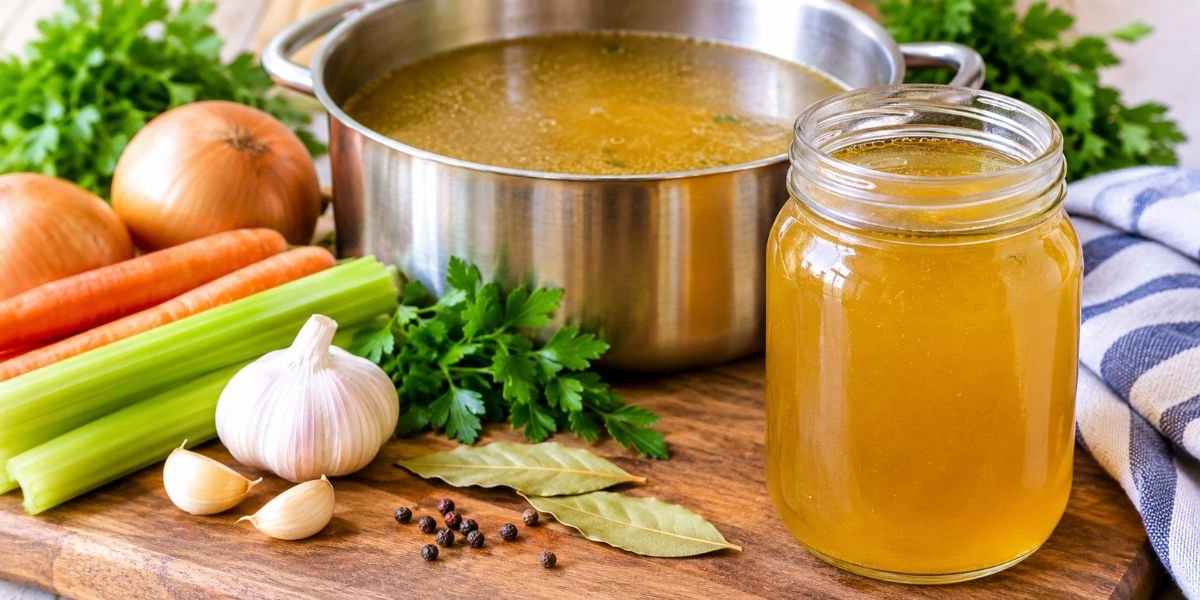
To make soup stock, put bones or vegetables in a large pot with onion, carrot, celery, herbs, and cold water, bring it slowly to a gentle simmer, skim off any foam, and cook for the right time for your ingredients. Then strain the stock, cool it quickly, and store it in the fridge or freezer. Homemade stock is cheap, uses up scraps, and gives soups, stews, and sauces a deeper flavour than most shop-bought cartons.
If you have never made it before, how to make soup stock is easier than it sounds. This guide gives a simple base recipe, variations for chicken, vegetable, beef, and fish stock, tips for a clear and tasty result, and food-safe cooling and storage advice.
Key Takeaways
- Stock is a flavourful liquid made by simmering bones or vegetables with aromatics in water.
- Start with cold water and keep it at a gentle simmer, not a rolling boil, for a clearer, cleaner stock.
- Cooking times vary: about 45 minutes for vegetable stock, 3 to 4 hours for chicken, 4 to 6 hours for beef, and 20 to 30 minutes for fish.
- Don’t salt the stock while it cooks. Season the finished dish instead.
- Cool stock quickly, store it in portions, and freeze what you won’t use soon.
What Is Soup Stock?
Soup stock is a base liquid made by simmering ingredients such as bones, vegetables, and herbs in water for a long time so their flavour passes into the liquid. It is usually unseasoned, which makes it a flexible foundation for soups, risottos, gravies, sauces, and braises.
Stock vs Broth vs Bouillon
The words are often used loosely, but a common kitchen distinction is:
- Stock: made mainly from bones (and often vegetables), simmered gently and usually left unseasoned.
- Broth: often made with meat as well as bones, and seasoned so it can be sipped on its own.
- Bouillon (cubes or powder): a concentrated, salty flavouring that you dissolve in hot water. It is convenient but less rounded in flavour.
In practice, many recipes use “stock” and “broth” interchangeably, so don’t worry if a recipe uses either one.
What You’ll Need
Equipment
- A large stockpot or heavy saucepan (4 to 5 litres is a good size)
- A slotted spoon or ladle for skimming
- A fine sieve or colander lined with muslin or kitchen paper
- Large bowl and containers for cooling and storing
- Freezer bags or tubs, and a marker for labels
Basic Ingredients (Makes About 2 Litres)
- 1 kg chicken bones or a leftover roast chicken carcass (or see the variations below)
- 2 onions, quartered (skins on adds colour)
- 2 carrots, roughly chopped
- 2 celery sticks, roughly chopped
- 2 bay leaves
- 6 to 8 black peppercorns
- A few parsley stalks and a sprig of thyme
- About 3 litres of cold water
Quantities are flexible. A simple rule is to cover your ingredients with cold water by about 2 to 3 cm.
How to Make Soup Stock: Step by Step
This method is for chicken stock, the most popular choice.
- Prepare the bones. Put the chicken bones in a large pot. If you are using raw bones, rinse them briefly. Wash your hands, board, and knife after handling raw chicken.
- Add the vegetables and herbs. Add the onions, carrots, celery, bay leaves, peppercorns, parsley stalks, and thyme.
- Cover with cold water. Starting with cold water helps the flavours release slowly and helps keep the stock clearer.
- Bring to a gentle simmer. Heat slowly until small bubbles break the surface. Don’t let it boil hard, as vigorous boiling can make the stock cloudy.
- Skim the foam. In the first 20 to 30 minutes, scum will rise to the top. Remove it with a slotted spoon or ladle.
- Simmer gently. Leave the pot partly covered and cook for 3 to 4 hours, adding a little hot water if the level drops below the bones.
- Strain. Remove large pieces with a slotted spoon, then pour the stock through a fine sieve into a clean bowl or pot. Discard the solids.
- Cool quickly. See the safe cooling section below.
- Remove the fat (optional). Once chilled, fat will form a layer on top that you can lift off. You can keep a little for flavour or discard it.
Stock Variations
Vegetable Stock (About 45 to 60 Minutes)
Use onions, carrots, celery, leeks, mushrooms, tomatoes, garlic, and herbs. Cover with cold water, simmer gently for 45 to 60 minutes, then strain. Vegetable stock is quicker than meat stock because vegetables release their flavour faster, and longer cooking can make it taste flat or bitter.
Beef Stock (4 to 6 Hours)
Roast beef bones with onion and carrot in a hot oven (around 220°C, 200°C fan) for 30 to 45 minutes until well browned, then simmer with water and aromatics for 4 to 6 hours. Roasting gives a deeper colour and a richer flavour.
Fish Stock (20 to 30 Minutes)
Use bones and heads from white fish (gills removed), with onion, celery, parsley, and a slice of lemon. Simmer for just 20 to 30 minutes. Fish stock turns bitter if cooked too long, and oily fish can make it taste too strong.
Using Kitchen Scraps
Keep a freezer bag for clean vegetable trimmings (onion ends, carrot tops, celery leaves, mushroom stalks) and chicken carcasses. When the bag is full, make stock. Avoid cabbage, broccoli, and other strong-smelling brassicas, which can overpower the flavour, and beetroot, which will turn the stock bright red.
Tips for the Best Homemade Stock
- Use cold water. It extracts flavour gently.
- Keep it at a gentle simmer. A few small bubbles are perfect.
- Skim early. It helps keep the stock clean tasting and clearer.
- Don’t add salt. Stock reduces and can become too salty. Season the final soup or sauce instead.
- Roast for depth. Browning bones and vegetables first adds a deeper flavour, especially for beef.
- Don’t stir. Stirring can cloud the stock.
- Add acidity (optional). A splash of vinegar or a little tomato puree can add balance.
- Taste as you go. If it tastes weak at the end, simmer it uncovered to reduce and concentrate it.
Common Mistakes to Avoid
- Boiling hard. This makes stock cloudy and can create a greasy texture.
- Cooking too long (vegetable and fish). Short-cooking stocks can turn bitter.
- Adding too much water. The stock will taste thin.
- Overloading with starchy vegetables. Potatoes can make stock cloudy.
- Leaving stock out to cool slowly. This is a food safety risk (see below).
- Salting too early. You can’t take salt out.
How to Cool and Store Homemade Stock Safely
Stock is a warm, moist, nutrient-rich liquid, which is exactly the kind of food bacteria like, so cooling and storing it properly matters.
Cooling
The Food Standards Agency advises dividing food into smaller portions in containers to cool it more quickly, and says cooked food should be in the fridge within two hours. Practical ways to cool stock fast:
- Pour it into shallow containers or several smaller ones.
- Stand the container in a sink of cold water or an ice bath and stir occasionally.
- Cool it, then refrigerate. Don’t leave large pots of stock sitting out.
Fridge
The FSA says your fridge should be between 0 and 5°C. Cover the stock and keep it in the coldest part of the fridge. Many cooking guides suggest using homemade stock within about 3 to 4 days. If it smells sour, looks cloudy or slimy, or you are unsure, throw it away.
Freezer
The FSA describes the freezer as a “pause button” for food and recommends a freezer temperature of around -18°C. Its freezing advice for homemade food includes:
- freeze leftovers and homemade foods as soon as possible
- cool dishes before putting them in the freezer
- wrap or seal food well in freezer bags or suitable containers
- label what you freeze, so you don’t end up with “unidentified frozen objects”
Freezing stock in useful portions saves time. Try ice cube trays for small amounts (a few cubes are perfect for sauces), 250 ml tubs for soups, and freezer bags laid flat to save space. Leave a little room at the top of rigid containers, because liquid expands when it freezes. Defrost in the fridge, and bring the stock to a full, steaming simmer before using it, especially if you will serve it to children, older people, or anyone with a weak immune system.
How to Use Soup Stock
- Soups: chicken noodle, vegetable, lentil, minestrone, or a simple broth with greens.
- Risotto and rice: use stock instead of water for more flavour.
- Gravies and sauces: a good stock is the base of a rich gravy or pan sauce.
- Stews and casseroles: replace some of the water with stock.
- Cooking grains: simmer couscous, quinoa, or lentils in stock.
- Sipping: season lightly and serve in a mug as a warming drink.
If you also like thoughtful routines at home, see our ideas for a relaxing evening in the night routine ideas guide.
Frequently Asked Questions
What is the easiest way to make soup stock?
Put leftover bones or vegetable trimmings in a pot with an onion, carrot, celery, herbs, and cold water. Simmer gently, skim, strain, and cool. Vegetable stock is the quickest, taking about 45 to 60 minutes.
How long should I simmer soup stock?
About 45 to 60 minutes for vegetable stock, 3 to 4 hours for chicken, 4 to 6 hours for beef, and 20 to 30 minutes for fish.
Should I boil or simmer stock?
Simmer. A gentle simmer gives a clearer, cleaner-tasting stock. Hard boiling can make it cloudy and greasy.
Can I use a slow cooker or pressure cooker?
Yes. A slow cooker works well for chicken or beef stock cooked on low for many hours, and a pressure cooker can shorten the time. Follow your appliance’s instructions, and don’t overfill it.
Why is my stock cloudy?
Common causes are boiling too hard, stirring, not skimming, or using starchy vegetables. Cloudy stock is still safe to eat if it has been handled correctly. It just looks less clear.
Can I salt stock?
It’s better not to. Stock may reduce when you cook with it, so salting early can leave your final dish too salty.
How long does homemade stock last?
In the fridge, many guides suggest using it within about 3 to 4 days. In the freezer, the FSA notes meat is usually best within 2 to 3 months, and homemade stock is commonly frozen for a similar period. Label containers with the date.
Can I reuse the bones for a second batch?
You can make a lighter second batch, but the flavour will be weaker. It is often better to start fresh or add new bones.
Is stock the same as bone broth?
Bone broth is usually simmered for much longer than regular stock. In everyday cooking, the terms overlap, and this guide covers a classic stock method.
Final Thoughts
Once you know how to make soup stock, you can turn leftover bones and vegetable scraps into a flavourful base for dozens of meals. Keep the heat gentle, skip the salt, cool it quickly, and freeze it in handy portions. After a batch or two, you will not want to go back to cartons.
Which stock will you try first: chicken, vegetable, or beef?


Leave a Reply