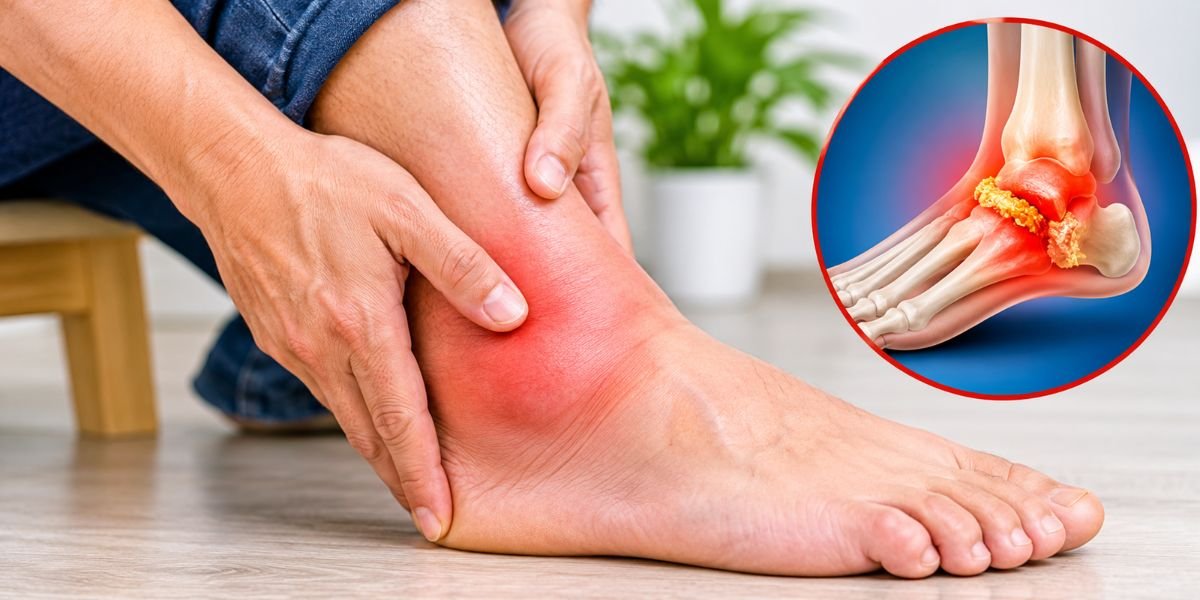
Gout in the ankle causes sudden, severe pain, swelling, heat, and redness in the joint, often coming on quickly and sometimes overnight. It happens when too much uric acid in the blood forms crystals around the joint. Gout most often affects the big toe, but NHS guidance says it can also affect the ankles and other joints. Treatment can ease an attack and help prevent future ones, but a proper diagnosis matters because other conditions can look similar.
This guide explains the symptoms, causes, diagnosis, and treatment of gout in the ankle, along with relief tips, how long an attack lasts, and when to get urgent help.
Key Takeaways
- Gout is a type of arthritis caused by too much uric acid in the blood, which can lead to crystals forming around joints.
- Ankle gout typically causes sudden severe pain, swelling, and hot, red skin over the joint.
- A gout attack usually lasts 1 to 2 weeks if left untreated, and getting treatment early is advised.
- See a GP for a diagnosis. Get urgent help if you also have a very high temperature, feel sick, or the pain is getting worse quickly, as this could be a joint infection.
- Medicines treat attacks and can prevent them. Lifestyle changes help, but evidence does not support one specific “gout diet”.
What Is Gout in the Ankle?
The NHS explains that gout is caused by too much uric acid in the blood, which can lead to crystals forming around joints and causing pain. Uric acid is a waste product the body makes when it breaks down certain substances. Gout in the ankle is the same condition as gout in the big toe, just in a different joint.
NHS information says gout is a type of arthritis that causes sudden, severe joint pain, usually in the big toe but sometimes in other joints in the feet, ankles, hands, wrists, elbows, or knees.
Common Symptoms of Ankle Gout
Based on NHS advice, the main symptoms of a gout attack in the ankle are:
- Sudden, severe pain in the joint
- Swelling around the ankle
- Hot, red skin over the joint. Redness may be harder to see on black or brown skin.
- Tenderness, where even light pressure on the joint can make the pain worse
- Pain that often comes on quickly and may be worst in the first day or so
An NHS trust patient page from Bradford District Care says that putting pressure on the joint can make the pain feel worse.
What Does Ankle Gout Pain Feel Like?
People often describe gout pain as intense and sudden. One clinical guide describes it as throbbing or crushing. The ankle may feel too painful to move or put weight on, and even a sheet touching the skin can be uncomfortable. Pain levels vary, so how it feels to you may differ.
Because other conditions can feel similar, never assume it is gout, especially the first time. See the warning signs below.
What Causes Gout in the Ankle?
Gout starts with high uric acid levels, but several things can contribute.
Why Uric Acid Builds Up
The body either makes too much uric acid or doesn’t clear enough through the kidneys. Having raised uric acid does not always mean you will get gout, but if crystals form in a joint, the immune system reacts, causing pain and swelling.
Risk Factors
NHS information says gout:
- sometimes runs in families
- is more common in men, especially as they get older
- is more likely if you have high cholesterol, high blood pressure, kidney problems, osteoarthritis, or diabetes
- is more likely if you have had surgery or an injury
NI Direct adds that it mainly affects men over 30 and women after the menopause.
Triggers for an Attack
The NHS lists these possible triggers:
- an illness that causes a high temperature
- drinking too much alcohol or eating a very large meal
- getting dehydrated
- injuring a joint
- taking certain medicines
Diet plays a part for some people, but it is rarely the whole story. Genetics, kidney function, and other health conditions matter too, so gout is not simply a result of lifestyle choices.
How Is Gout in the Ankle Diagnosed?
A GP will ask about your symptoms, diet, alcohol use, medicines, and family history, and examine the joint. A blood test can measure uric acid, according to NHS 111 Wales. In some cases further tests, such as joint fluid analysis or scans, may be used if the diagnosis is unclear.
NI Direct stresses that it is important to confirm the diagnosis, because other conditions that need urgent treatment, such as an infected joint, can sometimes cause similar symptoms.
Is It Gout or Something Else?
A hot, swollen ankle can have several causes, including:
- A joint infection (septic arthritis), which is an emergency
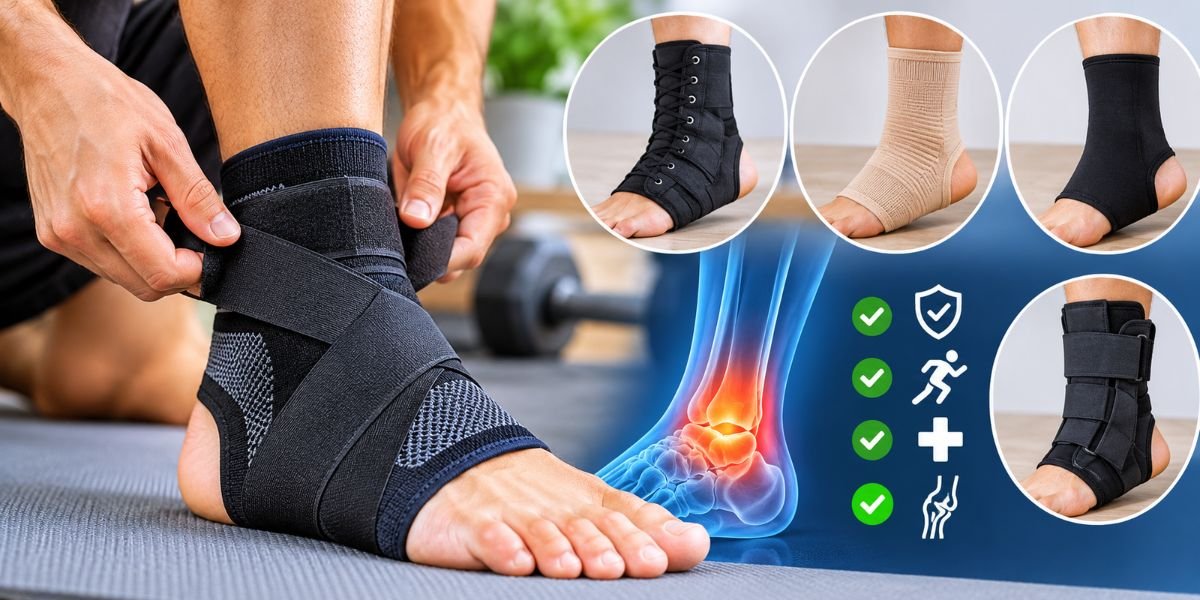
- A sprain or other injury. See our guide to ankle support braces for sprain-related information
- Other types of arthritis
- A reaction to an insect bite or skin infection
Don’t guess. If you have sudden joint pain and swelling, see a GP.
Best Treatment Options for Ankle Gout
Treatment has two goals: calm the attack and prevent future ones.
Treating an Attack
The NHS says gout can be treated with painkillers such as ibuprofen, and that you should take your medicine immediately when an attack starts. The NICE guideline on gout recommends offering one of the following as first-line treatment for a flare, depending on your other health conditions, other medicines, and preferences:
- a non-steroidal anti-inflammatory drug (NSAID)
- colchicine
- a short course of oral corticosteroid
NICE also suggests considering a stomach-protecting medicine for people taking an NSAID, and a steroid injection into the joint or muscle if the other options aren’t suitable or don’t work. Medicine choice should always be made with a doctor or pharmacist, as some of these medicines are not suitable for everyone.
Preventing Future Attacks
Gout can come back every few months or years. NI Direct says you can prevent further attacks through lifestyle changes and medicines that lower uric acid, and that lifelong treatment is usually required. NICE guidance says urate-lowering therapy should be discussed with people who have had a flare, that it is usually continued after the target level is reached, and that it is typically started at least 2 to 4 weeks after a flare has settled. A GP will decide what is right for you.
The NHS advises taking uric-acid-lowering medicine regularly, even when you have no symptoms. NICE also suggests a follow-up appointment after a flare settles to check uric acid levels and give advice on self-management.
Possible Complications
Leaving gout untreated may cause lasting joint damage, according to NHS guidance. Very high uric acid levels can also lead to kidney stones, and urate crystals can form lumps under the skin, called tophi, which can be painful.
Home Remedies for Ankle Gout Relief
These tips can help ease discomfort during an attack, alongside any medicine your doctor has advised. They are not a replacement for treatment.
- Take your prescribed or recommended medicine straight away. The NHS says to get treatment immediately when an attack starts.
- Rest and raise the ankle. NHS-based advice says keeping the joint raised may help.
- Avoid pressure on the joint. The NHS says pressure can make pain worse, so keep bedding and tight clothing off the ankle where you can.
- Try a cold pack. NICE says applying an ice pack, in addition to prescribed medicine, may help ease the pain. Wrap it in a cloth so it doesn’t touch your skin directly.
- Stay hydrated. Dehydration is a listed trigger.
- Check before taking painkillers. Ibuprofen is not suitable for everyone, for example some people with stomach ulcers, kidney problems, or asthma. Ask a pharmacist.
Foods and Lifestyle: What to Know
The NHS suggests ways to help prevent gout returning:
- aim for a healthy weight if you are overweight, but avoid crash diets
- eat a healthy, balanced diet. Your doctor may suggest foods to include or limit.
- have some alcohol-free days each week
- don’t smoke
NICE adds an important point: it found there is not enough strong evidence that any specific diet prevents flares or lowers uric acid levels, so it recommends a healthy, balanced diet. The NHS and NICE both list heavy drinking and very large meals as possible triggers. Some people notice that alcohol, especially beer, or large meat-heavy meals set off their attacks, so it can help to keep a note of your own triggers. NHS 111 Wales also points to the UK Gout Society for more detailed diet advice.
How Long Does Gout in the Ankle Last?
The NHS says an attack of gout usually lasts 1 to 2 weeks if left untreated, and future attacks may last longer if untreated. With treatment, symptoms often improve sooner. NI Direct advises seeing your GP if prescribed medication hasn’t started working within a couple of days.
When Should You See a Doctor?
See a GP if you have symptoms of gout for the first time, or if you have gout and your usual treatments aren’t helping.
Ask for an urgent GP appointment or get help from NHS 111 if you have sudden pain and swelling in a joint and:
- the pain is getting worse
- you also have a very high temperature (you feel hot and shivery)
- you also feel sick or can’t eat
The NHS says these symptoms could mean you have an infection inside your joint and need urgent medical help. If you can’t get through, or symptoms are severe, go to A&E.
Frequently Asked Questions
What does gout in the ankle feel like?
It usually causes sudden, severe pain with swelling, heat, and redness in the ankle. Many people find even light pressure on the joint very painful.
Can gout affect the ankle?
Yes. Gout most commonly affects the big toe, but the NHS says it can also affect the ankles, feet, knees, hands, wrists, and elbows.
How long does ankle gout last?
An attack usually lasts 1 to 2 weeks if untreated, according to the NHS. Prompt treatment is advised.
How do you treat gout in the ankle?
Treatment usually involves anti-inflammatory medicines or colchicine, or a short course of steroids, to settle the attack. Long-term medicine can lower uric acid and prevent future attacks. A GP or pharmacist can advise what is suitable for you.
What causes gout flares in the ankle?
Illness with a high temperature, heavy drinking, very large meals, dehydration, joint injury, and some medicines can trigger attacks, according to the NHS.
Is gout in the ankle serious?
Gout is treatable, but untreated gout can cause lasting joint damage and other problems such as kidney stones. A sudden hot, swollen joint with fever or feeling unwell needs urgent assessment.
Can gout be cured?
Gout can be controlled. NI Direct says lifelong treatment is usually required to prevent further attacks, and medicines that lower uric acid can reduce attacks when taken regularly.
Is gout caused by diet alone?
No. Diet can contribute for some people, but genetics, kidney function, and other health conditions are also important.
Final Thoughts
Gout in the ankle can be painful and alarming, but it is a recognised, treatable condition. Get a proper diagnosis, treat attacks early, and ask your GP about long-term prevention. Seek urgent help if the joint is hot and swollen and you also have a fever or feel unwell.
Have you had a diagnosis yet, or are you still waiting to find out what is causing your ankle pain?

Leave a Reply