
Cubed kumara takes about 10 to 15 minutes to boil. Whole kumara takes longer, usually 25 to 40 minutes, depending on size. That’s the short version.
The longer version matters, because kumara goes from perfectly tender to waterlogged mush faster than most people expect. Here’s how to time it, test it, and use it.
First, What Is Kumara?
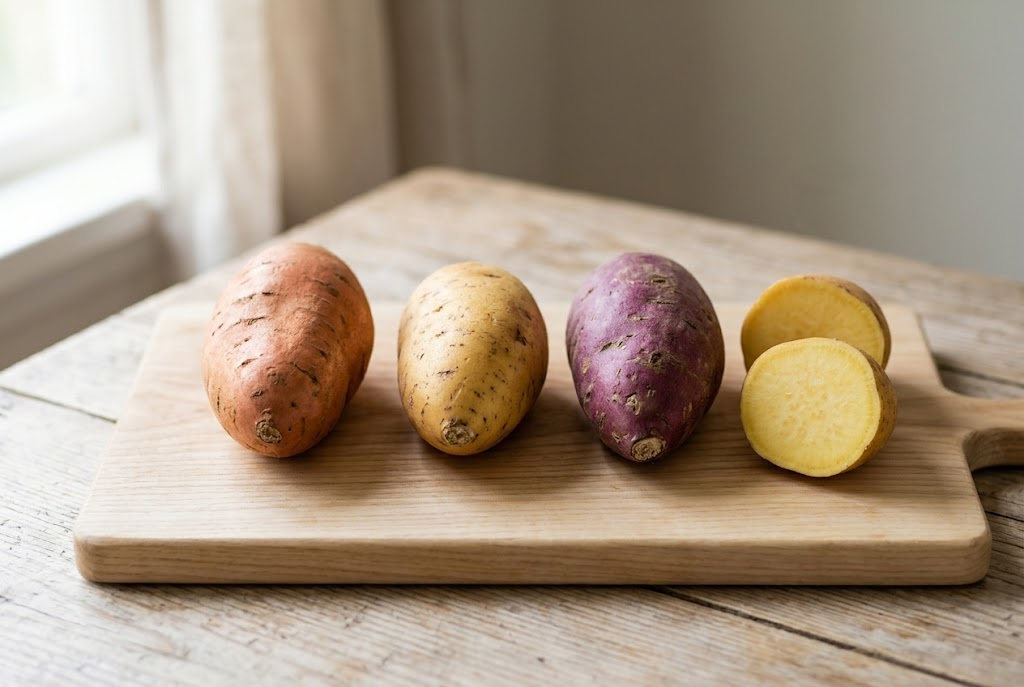
Kumara is the New Zealand and Pacific name for sweet potato. If you’re in the US, the UK, or Australia, the vegetable you’re looking for is the same one, and the boiling times are the same too.
The color varies. Orange kumara is the most common and tends to be soft and sweet. Gold and red-skinned types are a little drier and starchier, and purple ones are denser and take a touch longer. These are general tendencies, and individual vegetables vary.
Boiling Times at a Glance
| Cut | Approx. time after water boils |
|---|---|
| 1-inch (2.5 cm) cubes | 10 to 15 minutes |
| ½-inch (1 cm) slices or rounds | 8 to 12 minutes |
| Large chunks, halved lengthwise | 15 to 20 minutes |
| Small whole kumara | 20 to 25 minutes |
| Medium whole kumara | 25 to 35 minutes |
| Large whole kumara | 35 to 45 minutes |
Treat these as estimates. Thickness matters more than weight, and a long skinny kumara cooks faster than a short fat one of the same weight. Start checking at the low end.
Start in Cold Water
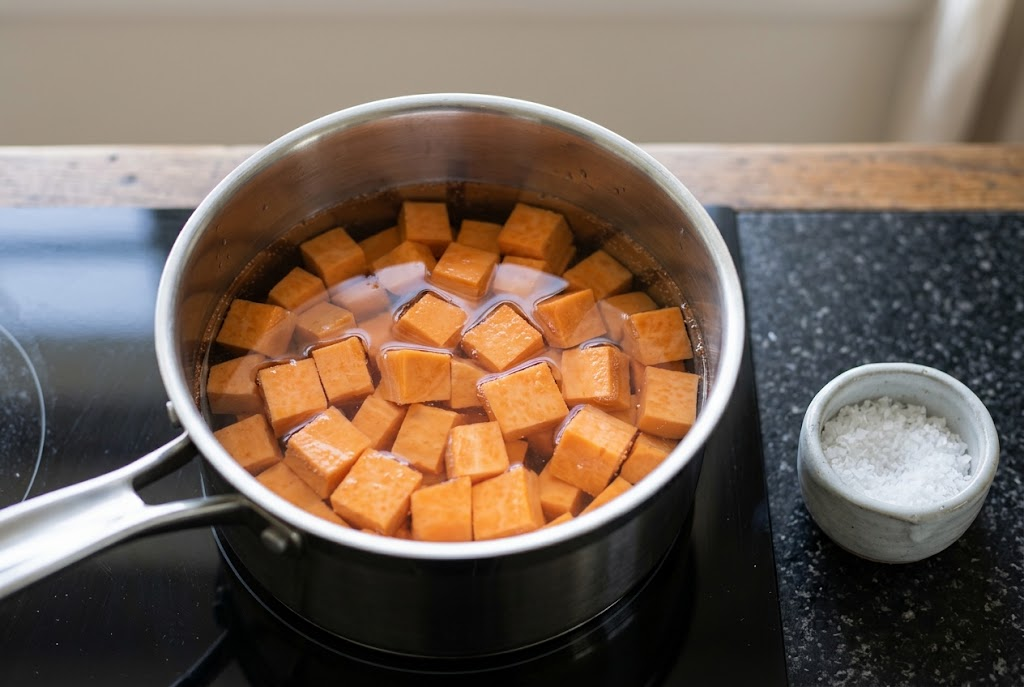
Put the kumara in the pot first, cover it with cold water by an inch or two, and then turn on the heat. Starting in cold water lets the vegetable warm up gradually, so the outside doesn’t turn to mush before the middle is cooked. A good pinch of salt in the water adds flavor from the inside out.
Once it boils, drop the heat to a steady simmer. A hard rolling boil knocks the pieces around and breaks them up, which is a problem if you want neat cubes.
Cut Evenly, or the Timing Falls Apart
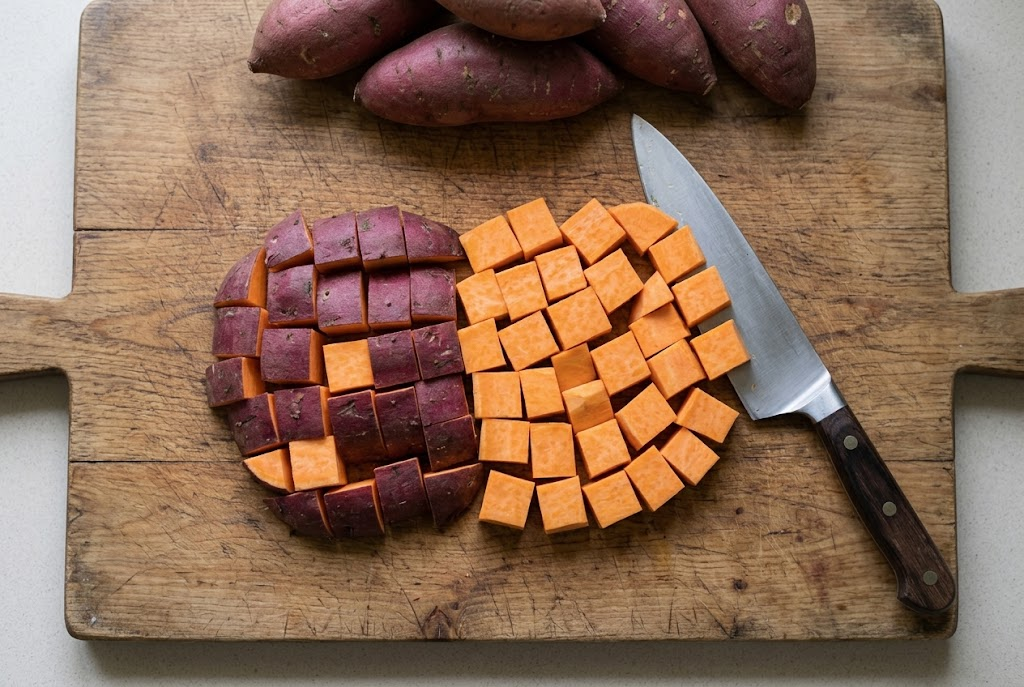
Pieces that are different sizes finish at different times. Aim for chunks that are about the same size, whether that’s 1-inch cubes for salads or bigger wedges for mashing. If you’re boiling whole kumara, pick ones of similar thickness for the same pot.
Whole kumara takes much longer, but it often holds more flavor and absorbs less water. Cutting it up is faster, though, and for most weeknight cooking that’s the better trade.
Skin On or Skin Off?
Both work. Boiling with the skin on helps the flesh stay firmer and less watery, and the skin slips off easily once it’s cooked and cool enough to handle. It also saves you peeling a raw, awkward vegetable.
If you’re making cubes for a salad or soup, peeling first is usually easier. Just wash the kumara well either way, since you’re handling the skin.
How to Tell It’s Done
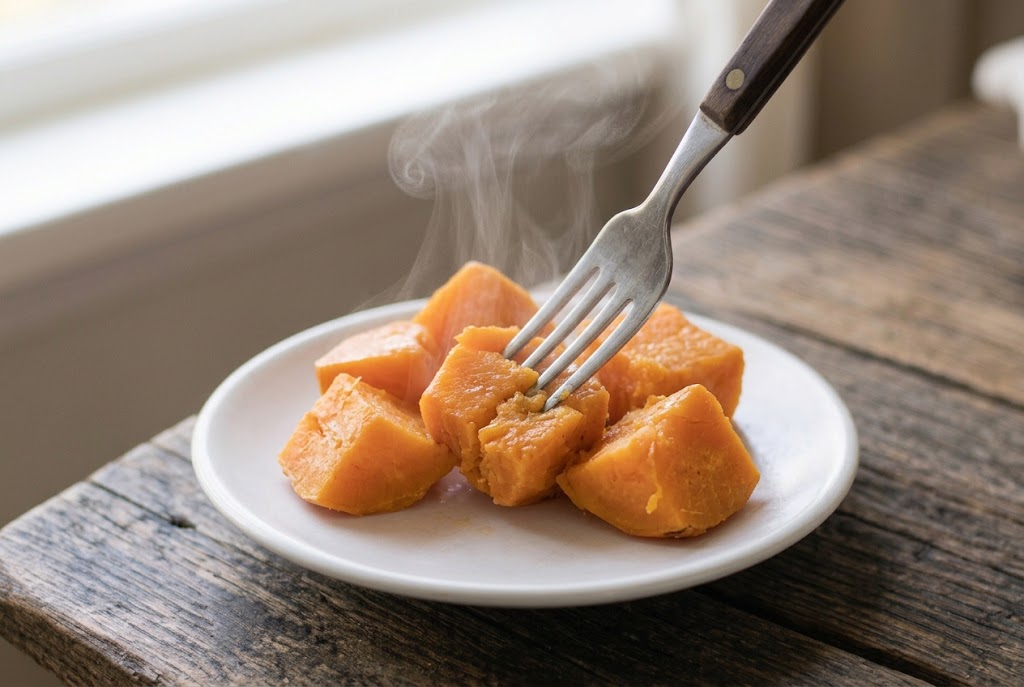
The clock gets you close, but the fork decides. Push a fork or the tip of a knife into the thickest part. It should slide in with little resistance, and the flesh should feel soft but still hold together.
If it meets firm resistance in the middle, give it another three to five minutes and test again. If it’s falling off the fork, it’s already past the point for cubes and is best used for mashing.
Don’t Overboil It
This is where most kumara goes wrong. Overcooked kumara soaks up water, turns watery and stringy, and loses flavor. It’s still edible, but it’s disappointing in a salad and hard to mash into anything smooth.
Pull it out as soon as a fork goes in easily. Drain it right away in a colander, and let it sit for a minute so the steam escapes. Leaving it sitting in hot water keeps it cooking.
What to Do With Boiled Kumara
Boiled kumara is a good blank canvas, and it works in a surprising number of dishes.
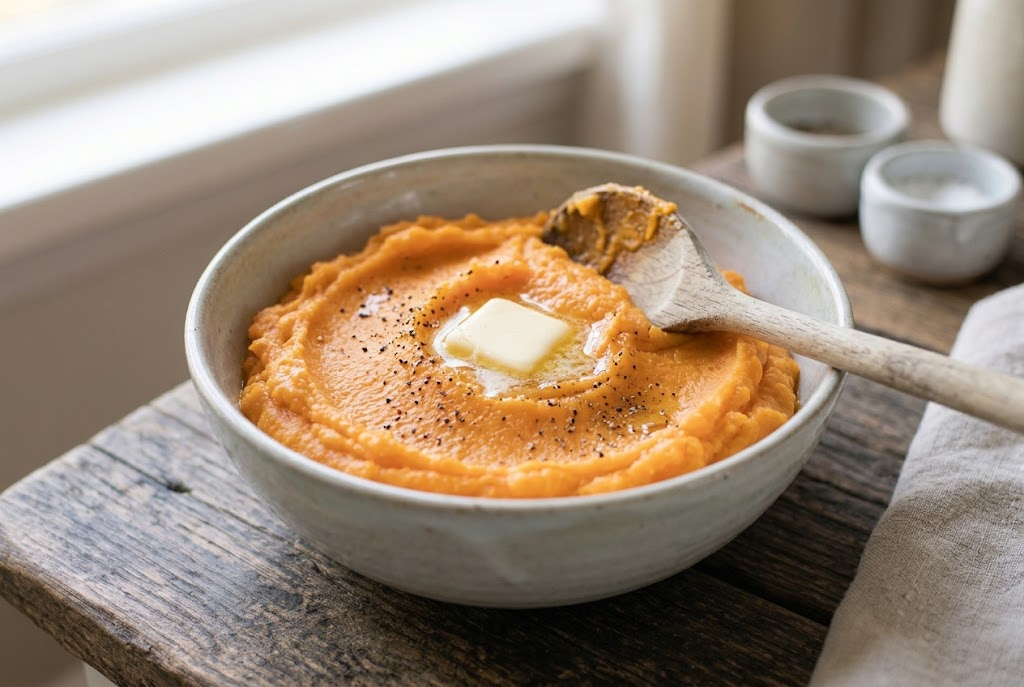
Mash. Boil large chunks for 15 to 20 minutes until very soft, drain well, then mash with butter, a splash of milk, and salt. A little black pepper or a pinch of cinnamon changes the mood completely. If it turns out watery, return it to the warm pot for a minute to steam off the extra moisture.
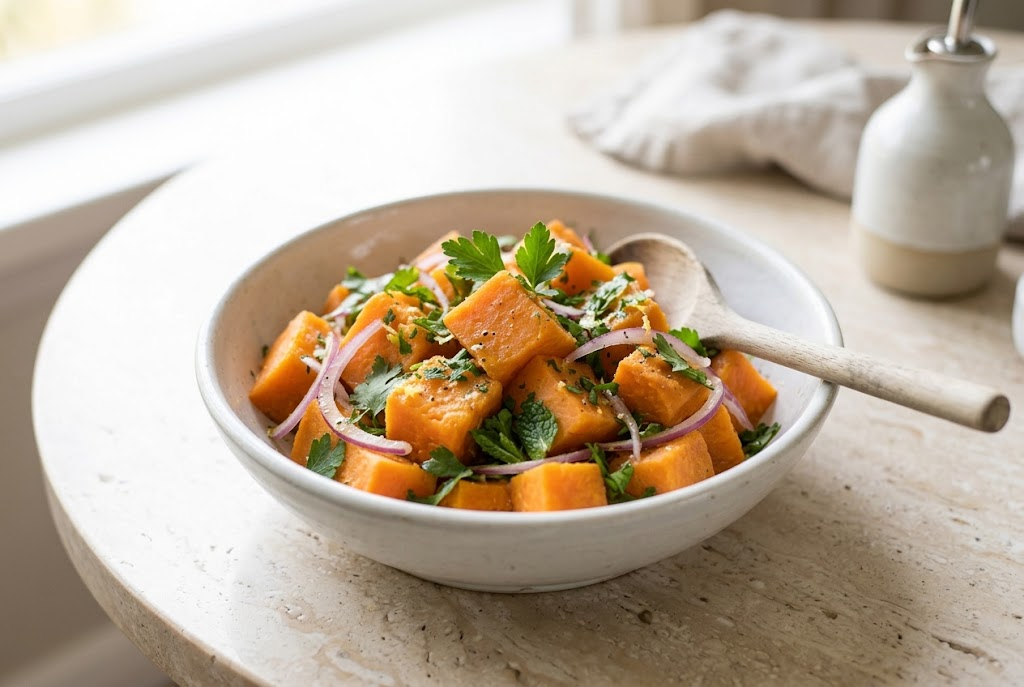
Salads. Cool 1-inch cubes, then toss with red onion, herbs, and a lemony dressing. They hold their shape best if you pull them from the water on the early side.
Soups and curries. Add boiled cubes to a pot near the end so they don’t fall apart. They’ll thicken the liquid slightly as they soften.
Baby food and soft diets. Boil until very soft and mash or puree. Skip added salt for infants, and check with a pediatrician or dietitian about when to introduce new foods.
Boiled, Baked, or Steamed?
Each method gives a different result. Boiling is quick and gives a soft, moist texture, which is ideal for mashing. Baking concentrates the sweetness and gives a drier, caramelized result, but it takes much longer. Steaming sits in between: it’s gentler than boiling, so the pieces keep more of their shape and absorb less water.
Some research suggests boiled sweet potatoes have a lower glycemic index than baked ones. If you manage blood sugar, though, individual responses vary, so talk to your doctor or a registered dietitian about what suits you.
Storing and Reheating Leftovers
Cooked kumara should go into the fridge within two hours of cooking, or within one hour if the room is hot. Store it in a sealed container and eat it within three to four days. The FoodSafety.gov cold food storage chart lists storage times for other leftovers.
Reheat until it’s steaming hot all the way through. The USDA recommends bringing leftovers to an internal temperature of 165°F. If you’re reheating mash, stir it halfway so it heats evenly.
You can freeze mashed or cubed boiled kumara too. Cool it quickly, portion it into containers, and use it within a few months for best quality.
Common Problems and Quick Fixes
Hard in the middle, soft outside. The pieces were too big, or the water boiled too hard. Cut smaller next time and keep it at a steady simmer.
Watery or mushy. It was cooked too long or left sitting in the water. Drain right away and, for mash, let the steam escape before mashing.
Bland. Salt the water, and season again after cooking. A squeeze of lime or lemon wakes it up.
Skin won’t slip off. Let the kumara cool for a few minutes, then rub the skin with your fingers or a paper towel.
Final Thoughts
For cubes, plan on 10 to 15 minutes after the water boils. For whole kumara, plan on 25 to 40. Start in cold water, keep it at a simmer, and trust the fork over the timer. Pull it out the moment it’s tender, and you’ll avoid the mush.
For more simple kitchen guides like this one, take a look at Praviceler.



Leave a Reply