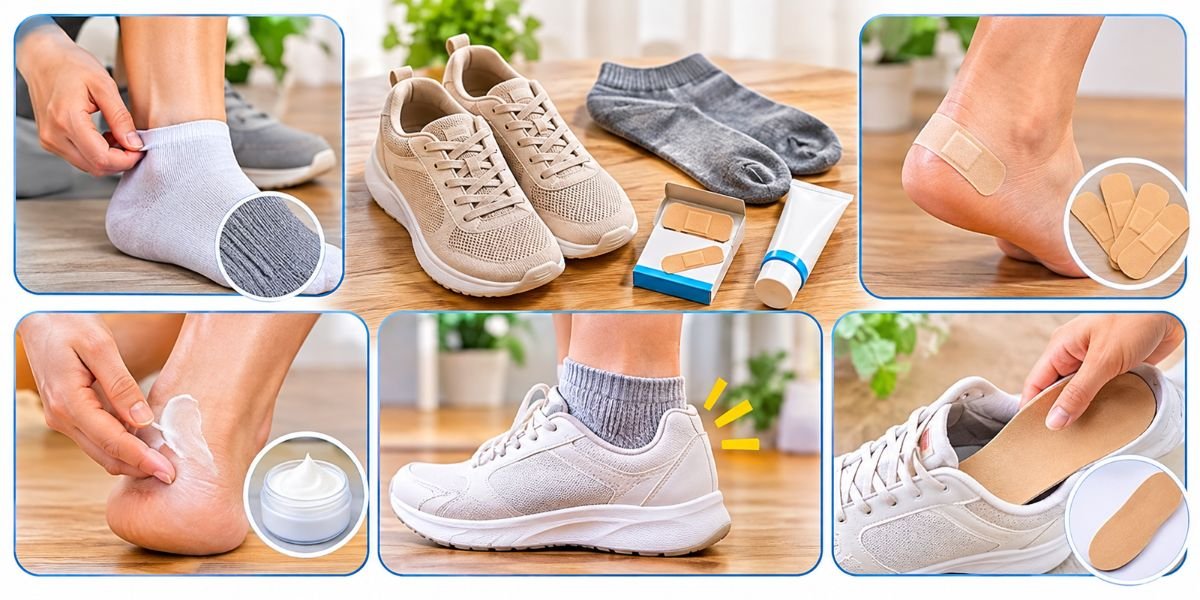
To stop shoes from blistering, make sure they fit well, wear moisture-wicking socks, break new shoes in slowly, and protect any rubbing spots with a plaster, moleskin, or anti-friction balm before a blister forms. Most shoe blisters are caused by friction, so the aim is simply to reduce rubbing and keep your feet dry.
Anyone who has worn a beautiful new pair of shoes only to limp home knows the feeling. The good news is that how to stop shoes from blistering is mostly a matter of small, practical habits. This guide covers why shoe blisters happen, nine easy ways to prevent them, how to break in new shoes, the best socks to wear, how to stop heel rubbing, and what to do if you already have a blister.
Key Takeaways
- Shoe blisters are mainly caused by friction, often made worse by sweat and poorly fitting shoes.
- Shoes should not be too tight or too loose, according to the American Academy of Dermatology (AAD).
- Moisture-wicking socks and protecting hot spots early are two of the simplest prevention steps.
- Break in new shoes gradually, for short periods at first.
- Most blisters heal on their own within about a week. See a GP if a blister looks infected, is very painful, or keeps coming back.
Why Shoe Blisters Are So Common
Our feet take a lot of pressure every day. Add a new pair of shoes, a long walk, hot weather, or a pair of shoes that doesn’t quite fit, and rubbing is almost guaranteed. Blisters can happen with trainers, work shoes, sandals, boots, and heels, and at any time of year.
What Causes Shoes to Give You Blisters?
According to an NHS factsheet, blisters develop to protect damaged skin and help it heal, and they are mostly caused by friction, burns, and skin reactions. For shoes, the usual causes are:
- Shoes that are too tight or too loose. Either one creates rubbing. The AAD advises that shoes shouldn’t be too tight or too loose.
- Sweaty or damp feet. Moisture can increase friction between your skin and your socks.
- New or stiff shoes. Materials haven’t softened yet and may rub in certain spots.
- Seams, folds, and rough edges. Inside seams and wrinkled socks can irritate the skin.
- Long walks without a break. Repeated rubbing over hours is a common recipe for blisters.
9 Practical Ways to Stop Shoes From Blistering
1. Get the Right Fit
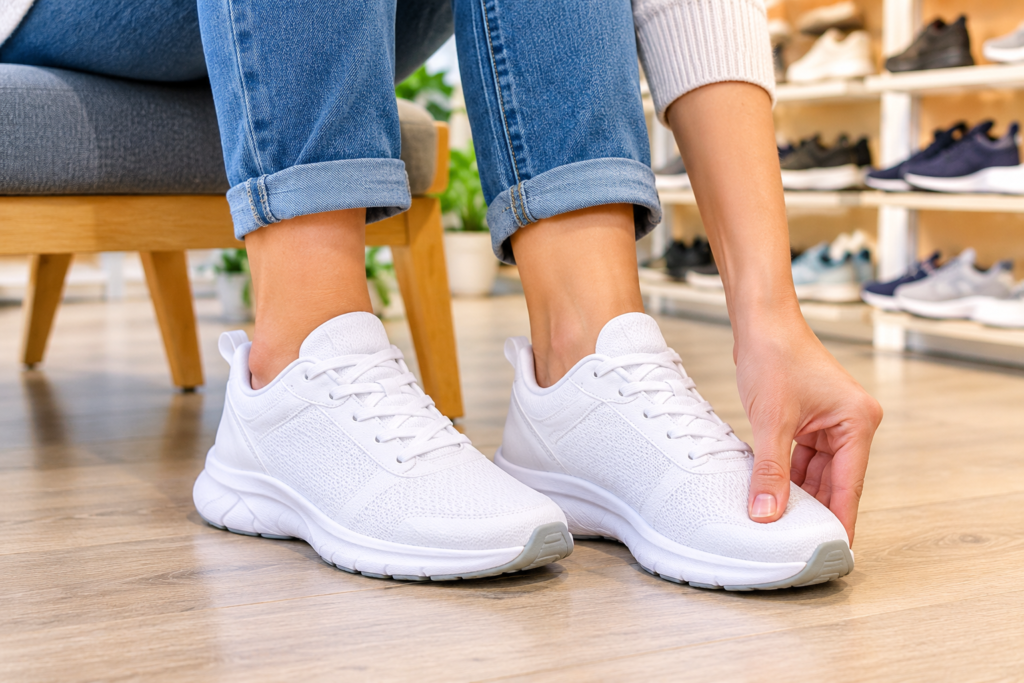
Fit comes first. Your shoes should have room for your toes to move without sliding around, and your heel should feel secure without being squeezed. Try shoes on with the type of socks you plan to wear, and walk around the shop. If a shoe rubs in the shop, it will probably rub more later. Padding can help a known rub point, but it can’t fix a pair that simply doesn’t fit.
2. Wear Moisture-Wicking Socks
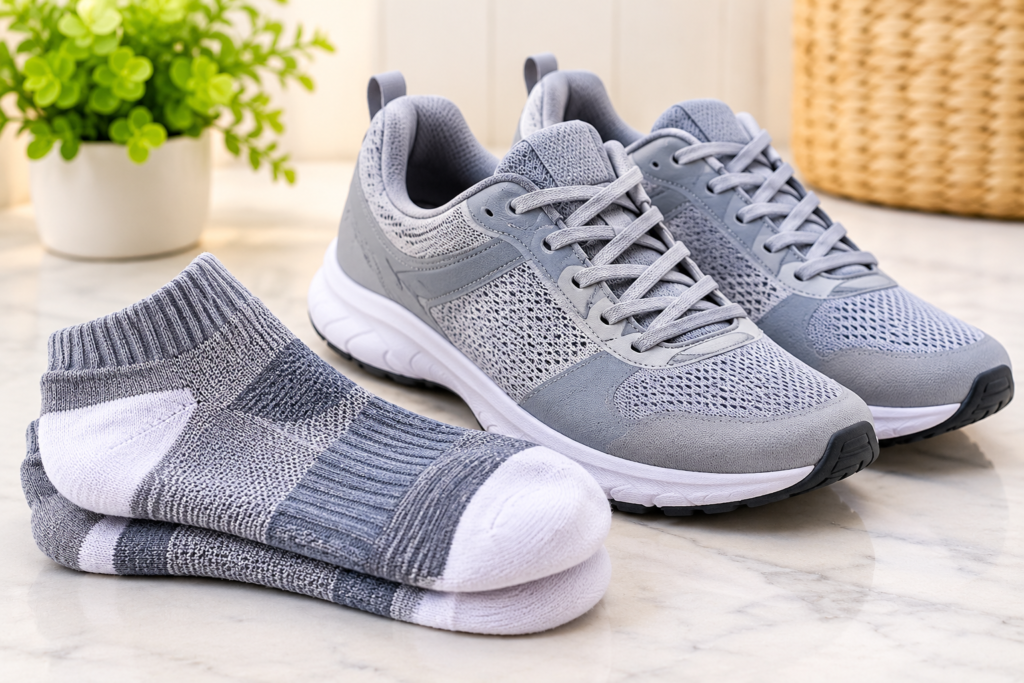
The AAD suggests nylon or moisture-wicking socks to help prevent blisters. Avoid thick cotton socks for long walks or exercise, as cotton holds moisture instead of drawing it away. More on socks below.
3. Break In New Shoes Gradually
Don’t wear brand-new shoes for a full day of walking, a long commute, or a big event. Wear them around the house or on short trips first, and build up the time slowly. We cover this in detail in the next section.
4. Protect Hot Spots Early
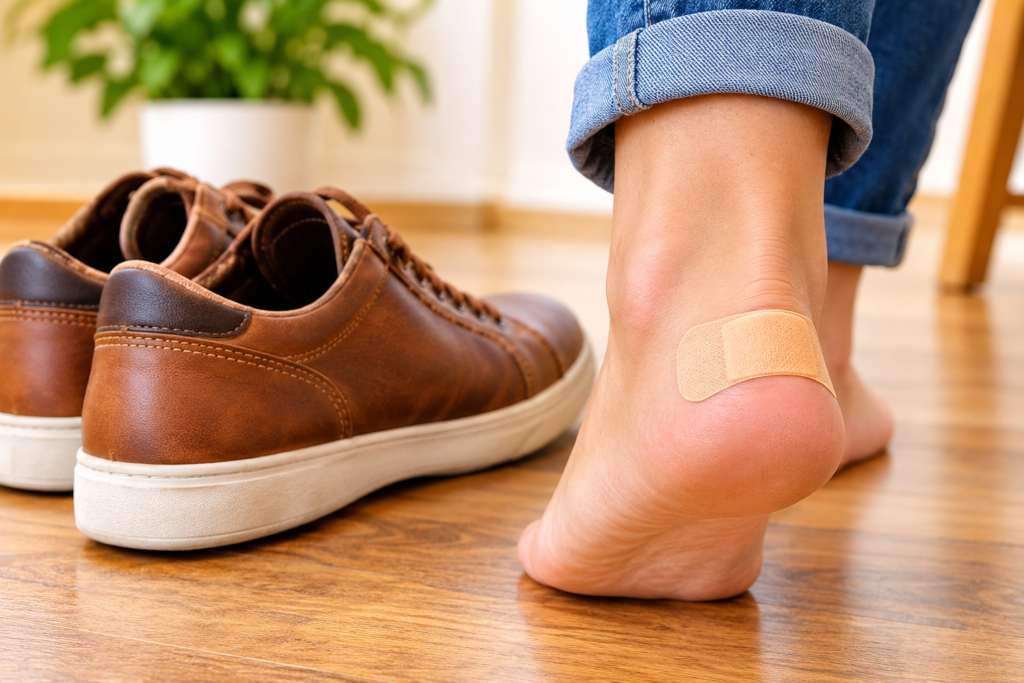
A “hot spot” is a patch where the shoe is starting to rub. The AAD recommends considering adhesive moleskin or other soft bandages on problem areas and making sure they are applied securely. Put the protection on before you leave the house if you already know where your shoes tend to rub, such as the back of the heel or the little toe.
5. Use Anti-Friction Balm or Powder
The AAD also suggests applying powder or petroleum jelly to problem areas to reduce friction. Anti-friction balms from pharmacies and sports shops work in a similar way. Apply a thin layer to clean, dry skin, and be aware that very slippery products can make some shoes feel looser.
6. Keep Your Feet Dry
Sweaty feet are more likely to rub. Change out of damp socks as soon as you can, and let your shoes air out between wears instead of wearing the same pair every day. If you find your feet sweat a lot, a pharmacist or GP can offer advice.
7. Try Insoles or Heel Grips for a Loose Fit
If your shoes are slightly too big, cushioned insoles or heel grips may help the foot sit more snugly and reduce sliding. This works best for small fit issues. If shoes are much too big or too small, it’s better to choose a different size or style.
8. Check for Seams and Wrinkled Socks
Run your hand inside each shoe to check for rough stitching or ridges. Pull your socks on smoothly, with no bunching around the toes or heel, since folds add friction.
9. Stop at the First Sign of Rubbing
The AAD advises stopping an activity if you feel pain or discomfort or notice redness, because carrying on can lead to a blister. If you’re out and about, sit down, adjust your socks, and cover the sore spot with a plaster. Keep a couple of spare plasters in your bag.
How to Break In New Shoes Without Blisters
Breaking in shoes means letting the material soften and mould to your feet over time. A simple plan:
- Start at home. Wear the shoes for 20 to 30 minutes indoors, with the socks you’ll normally wear.
- Build up slowly. Add a little time each day, or wear them for short trips before using them for a full day.
- Consider a second pair of socks. Podiatrists quoted by Peloton suggest two pairs of socks can help while breaking in new shoes, and the AAD also mentions two pairs if one isn’t enough.
- Keep workouts short at first. The same article recommends runners keep early runs short in a new pair.
- Protect rub spots in advance. Apply moleskin or a plaster to places where you can feel pressure.
- Don’t force it. If shoes still hurt after a few short wears, they may simply be the wrong fit, and it’s worth checking the returns policy.
Best Socks to Prevent Shoe Blisters
The right socks make a noticeable difference. A health library article drawing on podiatric and dermatology sources, Choose Your Socks With Care, says that much of what we know about socks and blisters comes from military studies, which found that synthetic fibres that draw moisture away from the skin may help prevent blisters. The same source highlights these features:
- Moisture-wicking fabric. Moisture increases friction by making skin stick to the sock.
- Padding in blister-prone areas. Look for cushioning at the toes and heels.
- Double-layer construction. Some socks have two layers to reduce rubbing.
- A snug, smooth fit. Socks shouldn’t be too tight or too loose, and seams shouldn’t be prominent.
- Not 100% cotton. The American Podiatric Medical Association recommends avoiding 100% cotton, which absorbs moisture instead of removing it.
Try shoes on with your usual socks so you can judge the fit properly.
How to Stop Shoes Rubbing Against Your Heels
Heel blisters are one of the most common complaints, especially with new flats, boots, and dress shoes. These tips can help prevent heel blisters:
- Check the heel fit. Your heel should feel held but not pinched. If it slips up and down, the shoe is probably too big or the wrong shape for you.
- Cover the back of the heel first. Apply moleskin, a blister plaster, or a thin layer of balm before putting your shoes on.
- Add heel grips. These sticky cushioned pads sit inside the back of the shoe and can reduce slipping.
- Wear socks that stay put. Choose socks with a snug heel. No-show socks that slide down can leave skin exposed.
- Soften stiff backs gradually. Wear the shoes in short bursts so the material has time to relax.
What to Do If You Already Have a Blister
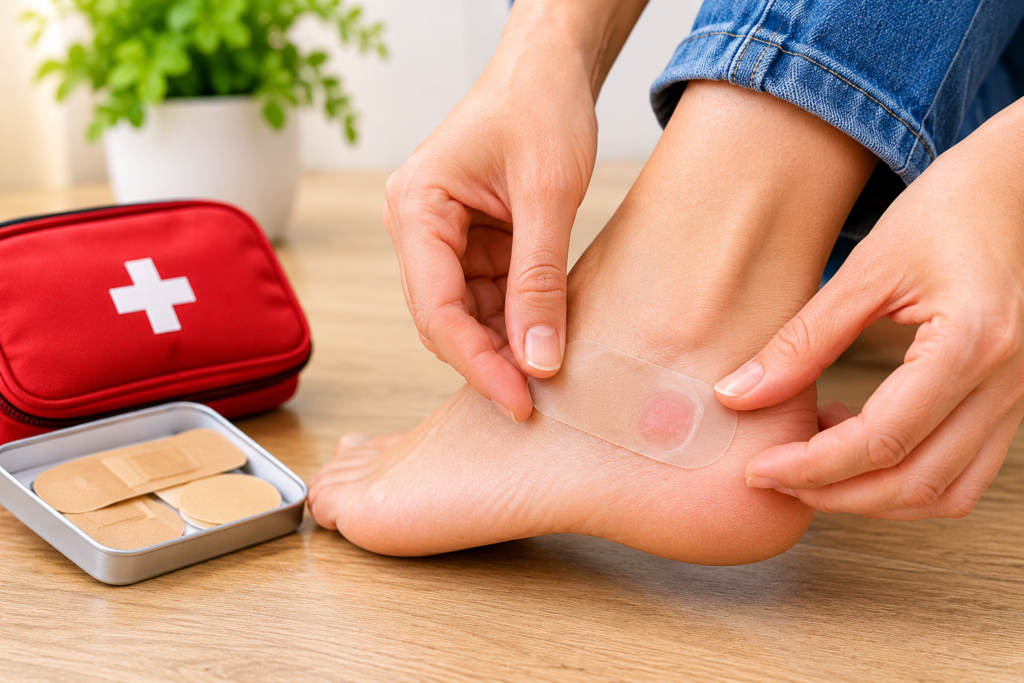
The NHS 111 Wales guidance says blisters often heal on their own within a week and that you shouldn’t need to see a GP. The usual self-care advice includes:
- Leave it alone where possible. Don’t pick at the edges of the remaining skin. The AAD adds that the covering skin protects against infection and that popping or draining is generally best avoided.
- Cover it. A pharmacist can recommend a plaster or dressing to protect the blister while it heals. A hydrocolloid dressing can protect it, help reduce pain, and speed healing, according to NHS content.
- Use padding. For blisters on pressure areas, the AAD suggests cutting padding into a doughnut shape, placing it around the blister, and covering both with a bandage.
- Rest from the shoes. NHS 111 Wales advises not wearing the shoes that caused the blister until it heals.
- Large and very painful blisters. The AAD says draining may sometimes be needed for comfort, using a needle sterilised with rubbing alcohol. If you’re unsure, ask a pharmacist or GP instead of doing it yourself.
When Should You Seek Medical Advice?
NI Direct, the UK government’s Northern Ireland information service, advises seeing a doctor if a blister:
- looks infected (filled with yellow or green pus, and painful, red, and hot)
- is very painful
- keeps coming back
The NHS notes that redness can be harder to see on brown or black skin. An NHS trust leaflet also advises that people with diabetes, poor circulation, or a weakened immune system should seek help from a GP or podiatrist for blisters, because they are more prone to infection.
This article is for general information only and isn’t medical advice. If you’re worried, contact your GP, pharmacist, or NHS 111.
Frequently Asked Questions
How do I stop new shoes from rubbing my feet?
Wear them for short periods at first, use socks that fit smoothly, and protect any pressure points with moleskin or a plaster. If the rubbing continues after a few short wears, the shoes may not fit you well.
How long does it take to break in new shoes?
It varies depending on the material and your feet. Many shoes feel comfortable after a few short wears, while stiff leather boots may need longer. Build up the time gradually.
What are the best socks to prevent blisters?
Look for moisture-wicking synthetic or blended socks that fit snugly without bunching, with padding at the heel and toes. Avoid 100% cotton for long walks or exercise.
Can wearing two pairs of socks help?
The AAD says that if one pair doesn’t help, two pairs may protect the skin. Make sure your shoes still have enough room so they don’t feel tight.
Should I pop a blister from my shoes?
It’s generally better not to. The covering skin helps protect against infection. If a blister is large and very painful, speak to a pharmacist or doctor about the safest approach.
How do I prevent heel blisters?
Check that the heel fits securely, cover the back of the heel with moleskin or a plaster before wearing the shoes, use heel grips if needed, and wear socks that stay in place.
How long do shoe blisters take to heal?
NHS 111 Wales says blisters often heal on their own within a week. The AAD says most heal within one to two weeks. See a healthcare professional if signs of infection appear.
Final Thoughts
Knowing how to stop shoes from blistering comes down to a few habits: choose shoes that fit, wear the right socks, break shoes in gradually, and protect trouble spots early. You don’t need to put up with sore feet just to look good or stay active. Try a couple of these tips with your next pair and see the difference.
Which tip will you try first?
Leave a Reply