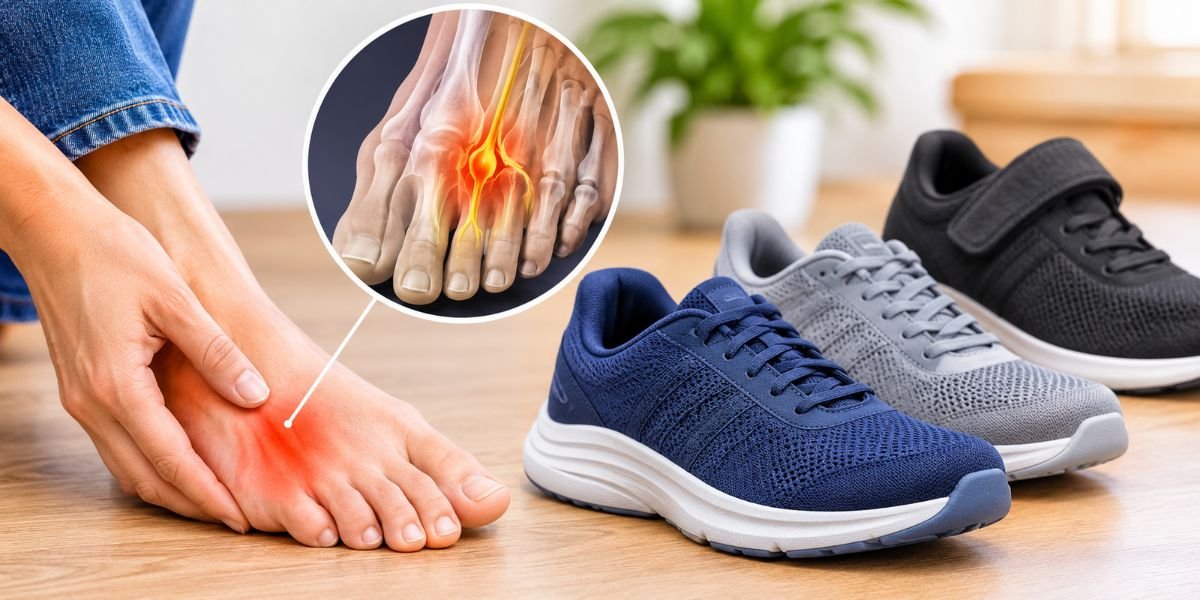
The best wide shoes for Morton’s neuroma have a roomy, deep toe box, a soft cushioned sole, a low heel, and laces or straps you can adjust. NHS and hospital guidance says footwear that gives your forefoot enough width and support is the first and most important treatment, while tight, narrow, high-heeled, and thin-soled shoes should be avoided.
If you have burning, tingling, or a “pebble in the shoe” feeling in the ball of your foot, the wrong shoes can make every step uncomfortable. This guide explains what Morton’s neuroma is, why wide shoes for Morton’s neuroma matter, which features to look for, which shoes to avoid, and when to see a professional.
Key Takeaways
- Morton’s neuroma is an irritated or damaged nerve in the foot, most often between the 3rd and 4th toes.
- Tight, narrow, high-heeled, and thin-soled shoes tend to make symptoms worse.
- Look for a wide, deep toe box, a soft cushioned sole, a low heel, and adjustable fastening.
- Soft insoles or metatarsal pads may add relief, and a podiatrist can advise on custom options.
- Footwear can help manage symptoms, but it doesn’t cure Morton’s neuroma. See a GP if symptoms persist or worsen.
What Is Morton’s Neuroma?
According to NI Direct (content adapted from the NHS), Morton’s neuroma is where a nerve in your foot is irritated or damaged. The Royal National Orthopaedic Hospital explains that, despite the name, it is not a nerve tumour but a painful swelling or irritation of the nerve between the long bones of the foot.
Common symptoms include:
- a shooting, stabbing, or burning pain in the ball of the foot, often between the 3rd and 4th toes
- a feeling that there is a pebble or lump under your foot
- tingling or numbness in the toes
Symptoms are often worse when you are active or wearing tight or high-heeled shoes, and they can get worse over time. It is more common in women than in men, and it most often affects people in middle age, according to NHS-based information.
Why Wide Shoes Matter for Morton’s Neuroma
Nobody knows the exact cause, but a hospital leaflet from York and Scarborough Teaching Hospitals NHS Foundation Trust says repeated compression of the nerve is thought to be the most likely reason, and that narrow, ill-fitting shoes can increase that compression.
That is why footwear is so important. The same leaflet describes shoes with adequate width and support as the first and most important treatment. A podiatry leaflet from Livewell Southwest goes further, saying that properly fitting footwear alone often resolves the condition. Results vary, though, and some people need extra treatment such as insoles, injections, or in rare cases surgery.
Other factors that can add pressure to the forefoot include wide foot types or bunions combined with unsuitable shoes, repeated impact activities such as running, tight calf muscles, higher body weight, and even tight hosiery.
7 Features to Look for in Wide Shoes
1. A Wide, Deep Toe Box
This is the number one feature. The Bradford District Care NHS Foundation Trust says shoes with a deep and wide toe box are preferable, because narrow footwear increases compression on the nerves. Your toes should be able to spread out without being squeezed from the sides or pressed from above.
2. A Soft, Cushioned Sole
The same trust advises avoiding thin, hard soles because they don’t absorb shock and can increase pressure on the nerves. Choose a sole with some thickness and cushioning under the ball of the foot.
3. A Low Heel
NHS advice for Morton’s neuroma is to wear wide, comfortable shoes with a low heel and a soft sole, and to avoid high heels. Note that some podiatry leaflets also mention “heel drop” (the height difference between heel and forefoot). If you aren’t sure what suits you, ask a podiatrist.
4. Laces or Adjustable Straps
Shoes with laces or adjustable straps are best, according to the Bradford trust, because you can loosen them around the forefoot as your feet swell during the day. Livewell Southwest adds that loosening laces or skipping lower eyelets may help the shoe fit your foot better.
5. A Rocker Sole (Curved Sole)
The Livewell Southwest leaflet notes that shoes with a rocker-sole shape can further reduce pressure at the forefoot. A rocker sole helps you roll through each step instead of bending at the ball of the foot.
6. Soft, Flexible Upper Material
Soft leather, stretchy knit, or other flexible uppers are less likely to press on sore areas. Livewell Southwest also says soft leather shoes can often be professionally stretched at the forefoot.
7. Room for an Insole
If you wear soft insoles, metatarsal pads, or custom orthotics, you need extra depth. Choose shoes with a removable insole so you can swap it for something that suits you without making the shoe too tight.
Best Types of Shoes for Morton’s Neuroma
Instead of chasing brand names, look for these shoe types, then check that they have the features above:
- Wide-fit walking shoes or trainers. They often have cushioned soles, lace-up fastening, and a roomy forefoot.
- Rocker-sole shoes. A curved sole can reduce pressure on the ball of the foot.
- Soft leather lace-ups or adjustable-strap shoes. They are easy to adjust and can be professionally stretched.
- Wide-fit supportive sandals. Choose cushioned soles and adjustable straps, not thin flip-flops.
- Wide toe box or “barefoot-style” shoes. Livewell Southwest notes that many barefoot shoes have a wide toe box that lets the toes spread and reduces nerve compression. However, very thin, flexible soles may not suit everyone, so ask a podiatrist if you are unsure.
If you are also dealing with rubbing, our guide on how to stop shoes from blistering covers fit, socks, and breaking in new pairs.
Shoes to Avoid With Morton’s Neuroma
NHS-based guidance says not to wear tight, pointy shoes, high heels, or shoes with thin soles. In practice, try to avoid:
- narrow or pointed-toe shoes
- high heels
- thin-soled flats and flip-flops with no cushioning
- worn-out shoes whose soles have flattened
- tight socks or hosiery that squeeze the toes
How to Choose the Right Shoe Size and Width
A good fit matters as much as the style. Try these steps:
- Do the tracing test. Livewell Southwest suggests tracing your foot on a piece of cardboard, cutting it out, and placing it inside your shoe. If your foot outline spills over the edges of the shoe at the forefoot, stop using that pair.
- Check width, not just length. A shoe can be the right length and still too narrow. Look for wide (E, 2E, 4E) or extra-wide fittings, which vary by brand.
- Try shoes on in the afternoon. Feet often swell during the day, so shop when they are at their largest.
- Wear your usual socks. Test the fit with the socks or orthotics you normally wear.
- Walk around. Stand and walk on a hard floor. Your toes should feel free, and nothing should pinch the ball of the foot.
- Don’t rely on breaking shoes in. If they feel tight in the shop, they are likely wrong for your feet.
Can Insoles and Metatarsal Pads Help?
They may. NHS advice for Morton’s neuroma suggests soft insoles or pads inside your shoes, and says a pharmacist can recommend metatarsal pads. The York hospital leaflet says that if footwear changes aren’t enough, insoles bought over the counter or provided by a podiatrist can often ease symptoms.
A podiatrist can assess your foot and provide custom insoles and advise on shoe changes. Note that insoles work best alongside suitable shoes, not as a replacement for a wide fit.
Everyday Tips for Reducing Foot Discomfort
- Take shoes off and massage your foot. NHS Forth Valley notes that pain is often relieved when footwear is removed and the foot is massaged.
- Rest and raise your foot when you can. Bradford trust advice includes rest and elevation.
- Use an ice pack. NHS-based advice suggests holding an ice pack or frozen peas wrapped in a towel on the sore area for up to 20 minutes every few hours.
- Consider pain relief. Ibuprofen or paracetamol may help. Ask a pharmacist which is suitable for you.
- Reduce high-impact activity. NHS advice suggests cutting down on running and jumping when symptoms flare.
- Stretch your calves. The Livewell Southwest leaflet says stretching the calf muscles can help reduce pressure at the forefoot.
- Replace worn shoes. Old shoes with flattened soles give less cushioning.
When to See a Podiatrist or GP
See your GP if your symptoms continue, keep getting worse, or stop you doing normal activities. The NHS also lists tingling, weakness, or numbness in the foot, and pain after a recent foot injury or foot surgery, as reasons to get checked. A GP can look at your foot and refer you to a foot specialist if needed.
A podiatrist or foot and ankle specialist may suggest insoles, injections, or, if other treatments don’t work and the pain is severe, surgery. In some areas you can refer yourself directly to NHS podiatry services without seeing a GP, though waiting times can be long, and you can also pay to see a podiatrist privately.
Frequently Asked Questions
What are the best shoes for Morton’s neuroma?
Look for shoes with a wide, deep toe box, a soft cushioned sole, a low heel, and laces or adjustable straps. Wide-fit trainers, walking shoes, rocker-sole shoes, and soft leather lace-ups are popular choices.
Do wide shoes cure Morton’s neuroma?
No. Wide shoes may reduce pressure on the nerve and help manage symptoms, and for some people symptoms settle with better footwear. But footwear isn’t a guaranteed cure, so see a healthcare professional if pain continues.
Are barefoot shoes good for Morton’s neuroma?
Some barefoot-style shoes have a wide toe box that allows the toes to spread naturally, which can reduce pressure. However, the soles are often thin and flexible, which may not suit everyone. Ask a podiatrist before switching.
Can I still wear heels with Morton’s neuroma?
High heels shift body weight onto the ball of the foot and are usually advised against. If you need dressier shoes, choose a low, wide heel with a roomy toe box and cushioned sole, and wear them for short periods.
Do metatarsal pads help Morton’s neuroma?
They can help some people by easing pressure on the forefoot. A pharmacist or podiatrist can show you how to place them, since the position matters.
How should shoes fit if I have Morton’s neuroma?
Your toes should be able to spread out, nothing should squeeze the ball of the foot, and your foot shouldn’t spill over the edge of the sole. Use the cardboard tracing test to check.
Is Morton’s neuroma serious?
It isn’t usually dangerous, but it can be painful and can get worse over time without changes. Early footwear changes and professional advice may help.
Final Thoughts
Choosing wide shoes for Morton’s neuroma is one of the most practical steps you can take to ease forefoot pain. Prioritise a wide, deep toe box, a cushioned sole, a low heel, and adjustable fastening, then check your fit carefully. Footwear can help you manage symptoms, but it isn’t a cure, so seek professional advice if the pain continues.
What is the most uncomfortable feature in your current shoes?
Leave a Reply