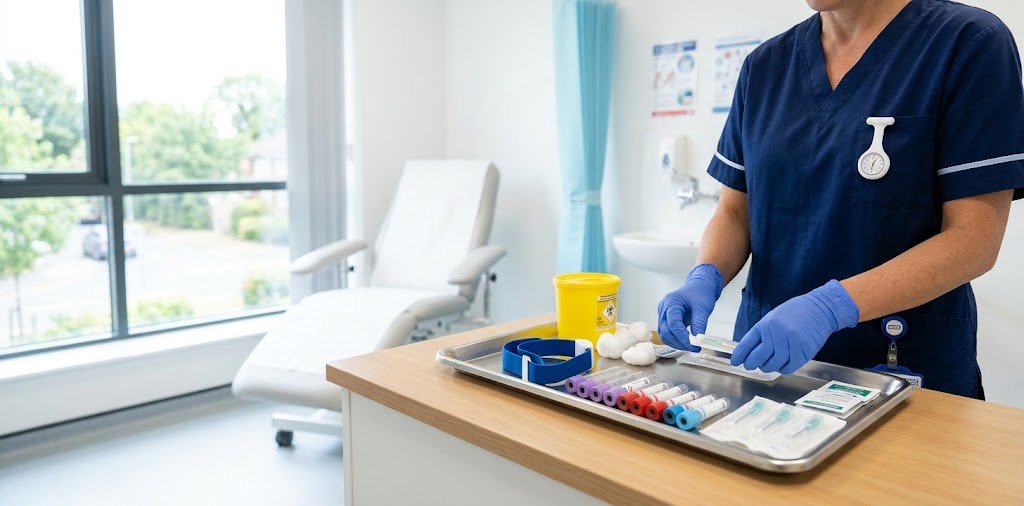
Your GP hands you a blood test form and says, “Book that in when you can.” Then comes the practical part. Where do you go? Do you need an appointment? Can you have a coffee first?
This guide covers the community blood test service for Medway and Swale in Kent, which many people still search for under the Medway Community Healthcare name. It explains who can use it, how booking works, and how to prepare.
Which Service Are We Talking About?
Community blood tests (also called phlebotomy) for Medway and Swale are listed on the website of Kent Community Health NHS Foundation Trust (KCHFT). Many people still look for the service under the old Medway Community Healthcare name. Organisations merge and websites change, so rely on the official KCHFT page for current details rather than on older listings.
Blood tests help clinicians diagnose conditions, monitor existing ones, and check how a treatment is working. Any healthcare professional can request one. They should give you a blood test form or an F number, plus instructions on how to prepare.
Who Can Use the Service?
The community service accepts patients registered with a GP in Medway and Swale. If your GP is outside that area, you’ll be asked to book through the service for your own region instead.
Also check who requested the test. If it came from a hospital consultant rather than your GP, ask which service you should use, because hospital arrangements can differ.
How to Book
Appointments are required. You can’t just turn up.
The online system lets you book up to six weeks ahead, and you can make as many appointments as you need. Online booking is also how you arrange a test for a friend or relative: add them to your account, then book for them.
If you can’t book online, phone 0300 123 3444 and choose option 1, then option 1 again. It’s worth knowing that the call handlers see the same appointment slots you see online. They can’t squeeze you in earlier, and the service doesn’t hold back urgent appointments.
If the wait is too long for you, go back to whoever requested the test and ask about alternatives. The same applies if your clinician says the test is urgent. Don’t wait for a routine slot to appear.
Choosing a Clinic
Clinics run at several community venues across Medway and Swale, and not every venue offers appointments every day. Locations mentioned in local listings include MCH House in Gillingham, Rainham Healthy Living Centre, the James Williams Healthy Living Centre in Chatham, and the Walter Brice Centre in Hoo. Addresses, parking and opening times change, so use the official clinic list and check your booking confirmation before you travel.
Preparing for Your Test
Preparation depends on the test, so follow the instructions you were given first. These are the general points the service lists.
Fasting. Not every test needs it. For glucose tests, the guidance is nothing to eat for 10 hours. For fasting lipid (cholesterol) tests, it’s 12 hours. During a fast, drink only tap water.
Water. Drinking water makes it easier to take your blood, so don’t skip it, even when you’re fasting.
Medication. Take your medication with water as usual, unless you’ve been told otherwise. The one exception mentioned is digoxin, which shouldn’t be taken less than six hours before a blood test. If you’re fasting, medication that has to be taken with food should wait until after the test. Never stop a prescribed medicine on your own. If you take insulin or other diabetes medication, speak to your GP or diabetes team before fasting so you get advice that fits your treatment.
Genetic tests. These need a morning appointment, Monday to Thursday, so the laboratory can process the sample in time.
What to Bring and Wear
Bring your blood test form or F number. Your GP gives you this, and you’ll need it on the day. Take your coat off before you go in and wear something with sleeves you can roll up easily.
What Happens During the Test
A trained phlebotomist checks your details and asks you to sit comfortably. They’ll then take blood, usually from a vein in your arm, with a small needle. You may feel a quick sting. The sample goes into labelled tubes for the laboratory, and pressure is applied afterwards, often with a small dressing.
The blood draw itself is usually quick. If you feel faint, anxious, or unwell at any point, say so straight away.
If You Tend to Faint
Fainting during a blood test is more common than people think, and there are sensible ways to reduce the risk.
- Don’t skip meals, and don’t fast for longer than you need to.
- Stay hydrated, ideally starting the day before and carrying on until the test.
- Avoid standing for long periods beforehand.
- Cut back on caffeine and alcohol before the appointment.
- Look away from the needle if it makes you queasy, and chat or read instead.
- Breathe slowly. If you feel symptoms starting, tensing your leg muscles or crossing your legs can help delay fainting.
The most useful step is telling the phlebotomist beforehand if you’ve fainted before. They can do the test with you lying down. Bringing a friend or relative to help you get home afterwards is also a good idea.
Blood Tests for Children
Book children’s tests online. These appointments often need more time so staff can reassure the child, and a fixed slot means less waiting around, which tends to keep a nervous child calmer.
If your child needs numbing cream, it should be applied 30 to 45 minutes before the appointment. Follow the product instructions and ask your healthcare professional if you’re unsure where to apply it.
Results
How quickly results come back depends on the test and the laboratory. Your GP or the clinician who requested the test is the right person to explain them. If you haven’t heard back within the timeframe you were given, contact that clinician. A single number rarely tells the whole story without your symptoms, history and the reference range, so avoid drawing conclusions from the result alone.
Frequently Asked Questions
Do I need an appointment?
Yes. Community blood tests are by appointment only.
What number do I call?
0300 123 3444, then option 1, then option 1 again. Check the official page in case this has changed.
Can I eat before a blood test?
It depends on the test. Follow the instructions your clinician gave you.
What should I bring?
Your blood test form or F number.
Can someone book for me?
Yes. You can add a friend or relative to your online account and book for them.
Can I get an urgent test?
Not through this service’s routine booking. Contact the clinician who requested the test.
Final Thoughts
A blood test goes smoothly when you’ve done the small things first: confirm you’re eligible, book ahead, follow the fasting advice for your specific test, and bring your form or F number. Always check the official KCHFT blood test page for current clinic and booking details. For more simple, practical guides, take a look at Praviceler.


Leave a Reply