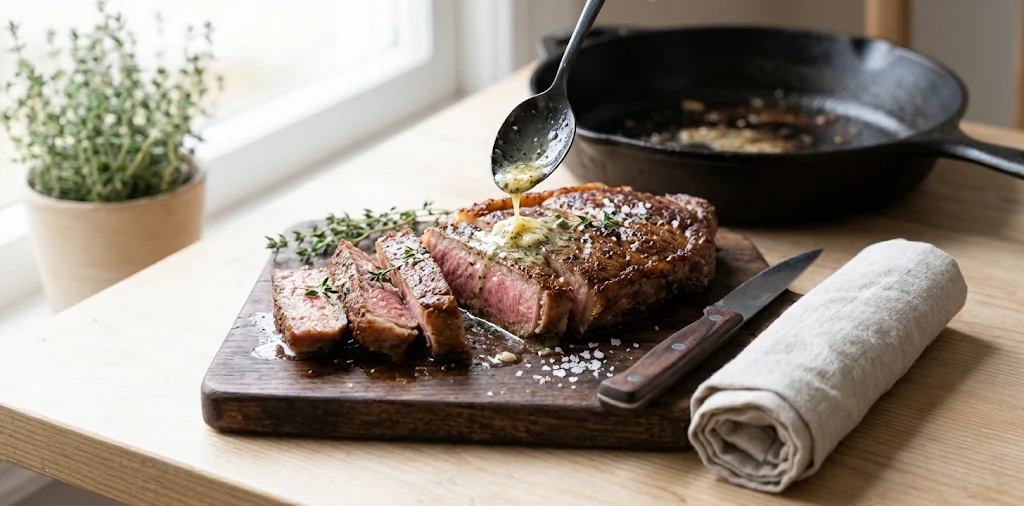
Cooking a good steak is mostly about doing less. A hot pan, a decent bit of meat, salt, and the patience to leave it alone. That’s really it.
The things that go wrong are usually the same few. The pan isn’t hot enough, the steak is cold from the fridge, or it’s cut straight out of the pan and the juices end up on the board instead of in the meat. All three are easy to fix.
Prep: 5 minutes (plus 30 minutes out of the fridge) | Cook: 6 to 12 minutes | Rest: 5 minutes | Total: about 20 minutes | Serves: 2 | Difficulty: Easy
Which Steak Should You Buy?
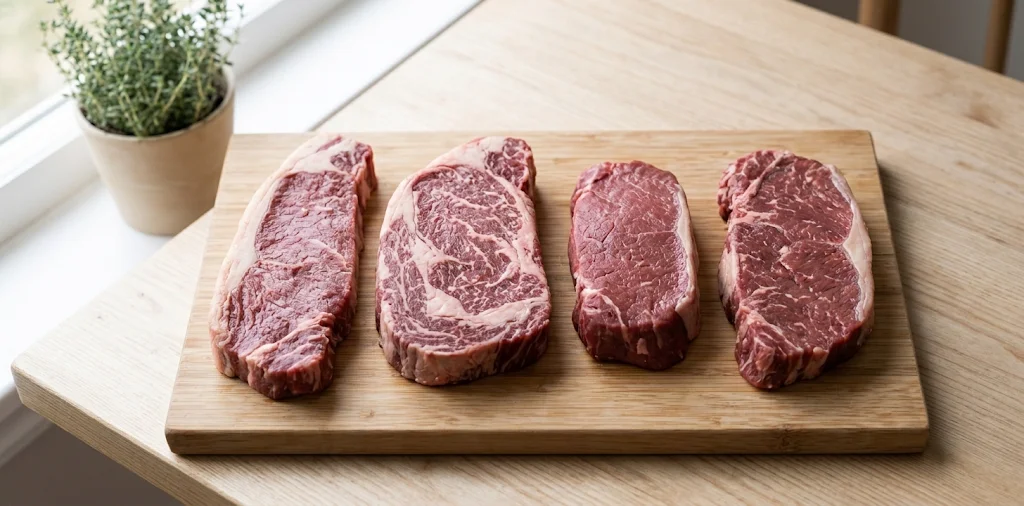
For pan-frying, you want a steak about 2.5cm (1 inch) thick. Much thinner and it overcooks before it browns. Much thicker and you’ll want to finish it in the oven.
- Sirloin: a good all-rounder, with a strip of fat along the edge that adds flavour.
- Ribeye: more marbling, so it’s richer and more forgiving. Usually pricier.
- Fillet: very tender and lean, with a milder flavour. It’s easy to overcook, so watch it closely.
- Rump: more flavour than tenderness, and often better value. Slice it thinly across the grain.
- Bavette or flat iron: budget-friendly cuts with plenty of flavour. Best cooked no further than medium and sliced across the grain.
Ingredients
- 2 steaks, about 225 to 250g each and 2.5cm thick (sirloin or ribeye work well)
- 1 tbsp rapeseed or sunflower oil (something with a high smoke point)
- Flaky sea salt and freshly ground black pepper
- 25g butter
- 2 garlic cloves, lightly crushed with the skin on
- A few sprigs of thyme or rosemary
How to Cook Steak in a Pan
Take it out of the fridge. Leave the steaks on the side for about 30 minutes before cooking. A steak that’s ice-cold in the middle takes longer to cook through, and the outside is more likely to overdo by the time the centre catches up.
Dry it and season it. Pat the steaks really dry with kitchen paper.
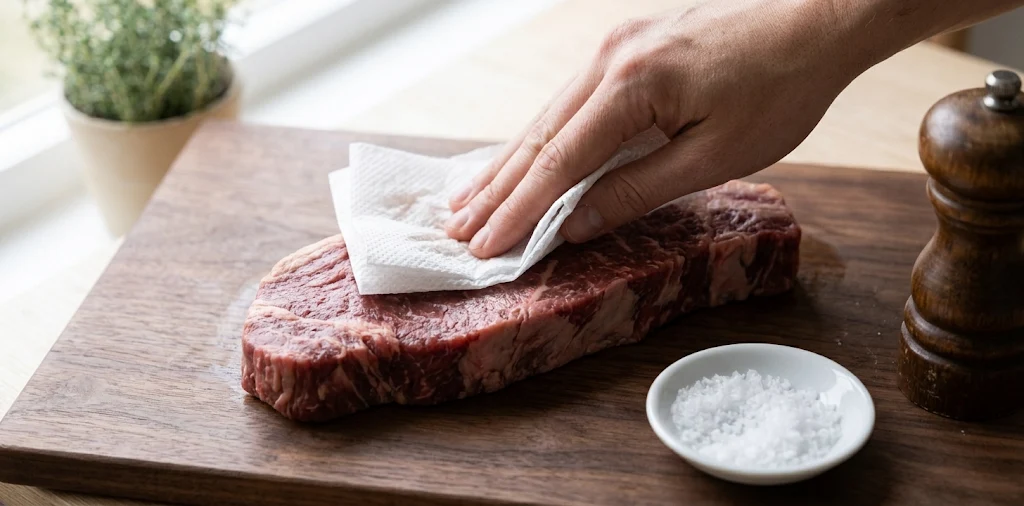
Moisture on the surface means the steak steams instead of browning. Season generously with salt and pepper just before they go in the pan.
Get the pan properly hot. Use a heavy-based frying pan or a cast-iron pan. Heat it over a high heat for a few minutes until it’s smoking slightly. Open a window and switch on the extractor, as it’ll get smoky.
Sear. Add the oil, then lay the steaks in, away from you so the oil doesn’t splash.
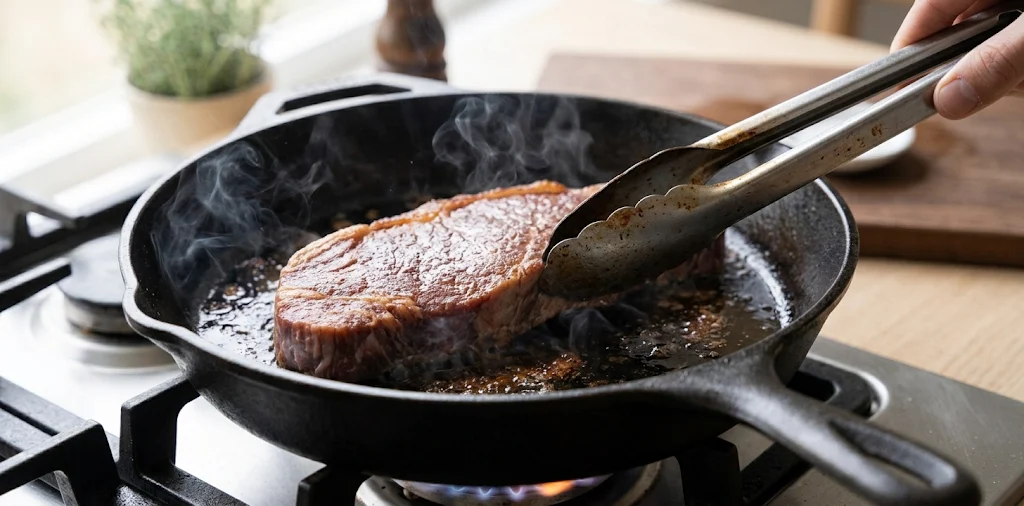
Don’t move them. Leave them to form a deep brown crust, which takes around 2 to 3 minutes for a medium-rare steak. Turn them once and cook the other side for the same time.
Add the butter. In the last minute, turn the heat down to medium and add the butter, garlic and herbs.
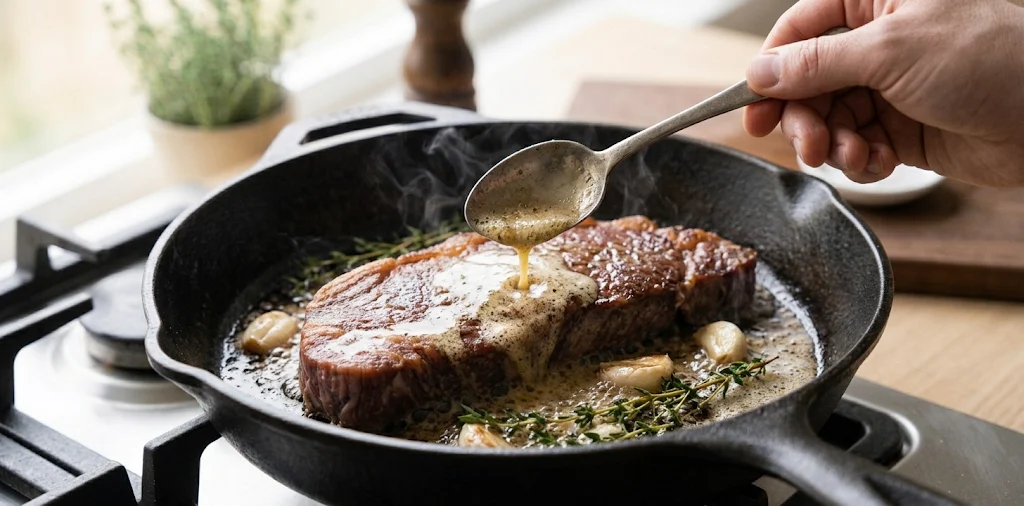
Tilt the pan and spoon the foaming butter over the steaks a few times. Adding the butter at the end stops it burning.
Check how it’s doing. Use the timings and temperatures below. A probe thermometer is the most reliable way, though you can also make a small cut in the thickest part and take a look.
Rest. Move the steaks to a warm plate or board and leave them for about 5 minutes, loosely covered with foil if you like.
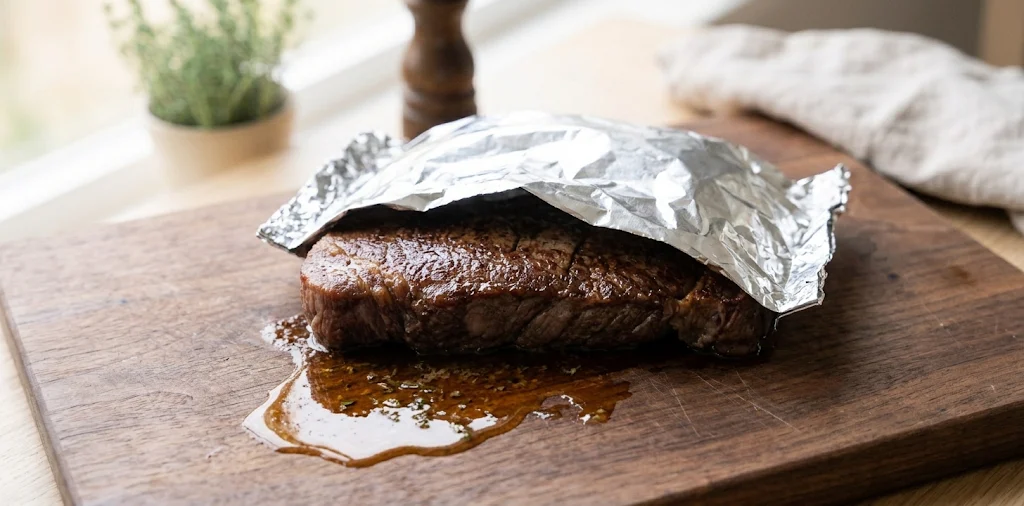
The juices settle back into the meat. If you slice straight away, you’ll watch them run out.
Steak Cooking Times and Temperatures

These are a guide for a steak about 2.5cm thick, cooked in a very hot pan. Thickness, the pan and your hob all change things, so treat the times as a starting point and trust a thermometer more than the clock.
| Doneness | Approx. time per side | Core temperature (before resting) | What it looks like |
|---|---|---|---|
| Rare | about 2 minutes | around 50 to 52°C | Deep red, cool to warm centre |
| Medium-rare | about 2 to 3 minutes | around 54 to 57°C | Red-pink, warm centre |
| Medium | about 3 to 4 minutes | around 60 to 63°C | Pink, hot centre |
| Medium-well | about 4 to 5 minutes | around 65 to 68°C | Slightly pink |
| Well done | about 5 to 6 minutes | 70°C or above | No pink, firmer, drier |
The temperature will rise a few degrees while the steak rests, so take it off the heat just before it reaches the level you’re aiming for. These doneness temperatures are cooking guides rather than safety rules.
Is It Safe to Eat Steak Rare?
For a whole cut of beef, such as a steak, the bacteria that cause food poisoning are mainly on the outside, and searing the surface deals with them. That’s why steak can be served rare when it’s cooked properly. It’s different for minced meat, burgers, sausages and rolled joints, which need to be cooked all the way through.
Pregnant women, older people, very young children and anyone with a weakened immune system should check the current Food Standards Agency and NHS advice before eating steak rare. If you want to be certain, cook it until there’s no pink and it’s steaming hot all the way through.
Tips for Better Steak
- Don’t crowd the pan. Two steaks in a big pan are fine. Four in a small one will drop the temperature and steam.
- Sear the fat. For sirloin, hold the steak on its fatty edge with tongs for a minute to render the fat and crisp it.
- Flip once or twice, not constantly. A good crust needs uninterrupted contact with the pan.
- Salt at the right time. Season just before cooking, or at least 40 minutes ahead. In between, the salt draws moisture to the surface.
- Slice across the grain. The muscle fibres show as faint lines. Cutting across them makes each slice more tender.
- Thicker steak? Sear it on both sides, then finish it on a baking tray in an oven at 180°C (160°C fan) until it reaches the temperature you want.
[YOUR EXPERIENCE: if you have a tip you genuinely found useful when cooking steak, add it here.]
What to Serve With Steak
Chips are the classic, but roast potatoes, mash or crispy sauté potatoes work too. For something lighter, try a green salad, tenderstem broccoli, green beans or griddled asparagus. Add a peppercorn sauce, chimichurri or just the garlic butter from the pan.
Storage and Reheating
Cool leftover steak and get it into the fridge within about two hours. Keep it in an airtight container and eat it within 2 days. Cold slices are great in salads and sandwiches. If you want to reheat it, make sure it’s steaming hot all the way through, and only reheat it once. Reheating will cook it further, so it won’t stay pink.
A Note on Nutrition
Steak is a good source of protein, iron and B vitamins, but we haven’t listed calories, because they depend on the cut, the fat, the portion size and how much butter and oil you use. For exact figures, put your own ingredients into a nutrition calculator. Red meat is best eaten as part of a varied diet, and the NHS has current guidance on how much red and processed meat to eat, so check it if you eat a lot. The NHS Eatwell Guide is a good reference for balancing the plate.
FAQs
How long should I cook steak for? For a steak about 2.5cm thick in a very hot pan, around 2 to 3 minutes per side gives medium-rare, and 3 to 4 minutes per side gives medium. Use a thermometer for accuracy.
Should I cook steak straight from the fridge? It’s better to leave it out for about 30 minutes first. A steak that isn’t ice-cold cooks more evenly.
Should I oil the steak or the pan? Either works. Oiling the pan is simpler, and a thin layer is all you need.
When should I add butter? In the last minute or so, once the heat is turned down. Butter burns if it’s in a very hot pan for the whole cook.
How long should steak rest? Around 5 minutes for a steak this size. Thicker cuts can rest a little longer.
Can I cook steak from frozen? It’s better to defrost it fully in the fridge first. It cooks more evenly and it’s safer.
Cast iron or non-stick? Cast iron or a heavy stainless steel pan gives the best crust. Non-stick pans usually can’t take the high heat that steak needs.
Is steak healthy? It’s a good source of protein and some nutrients, but it’s best as part of a varied diet. If you follow a medical diet, check with your GP or a registered dietitian.



Leave a Reply