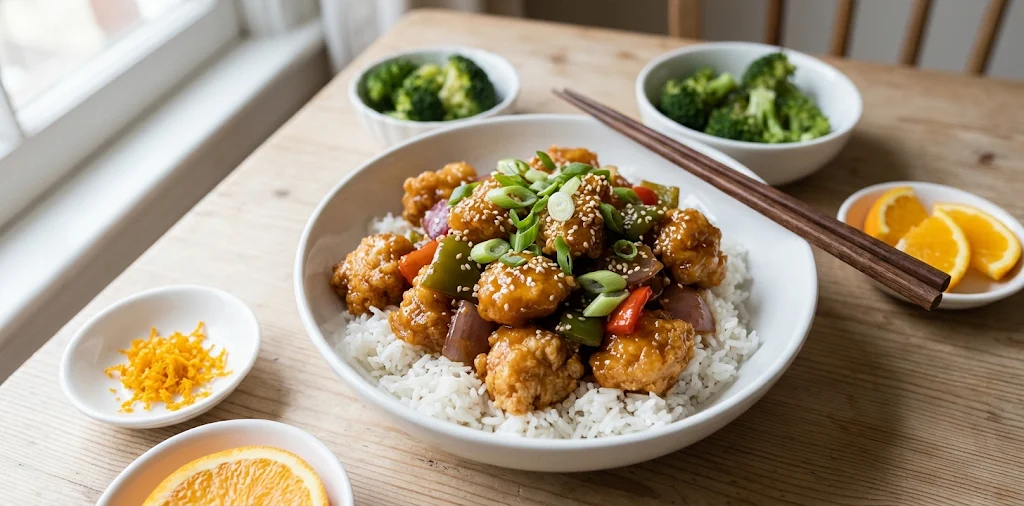
Takeaway orange chicken is lovely, but it’s often so sweet that you’re tired of it halfway through the box. The homemade version fixes that. You use real oranges, you decide how much sugar goes in, and the chicken stays properly crisp because you’re eating it straight from the pan.
It’s not a difficult recipe. If you can coat chicken in cornflour and stir a sauce, you can make this. Allow about 40 minutes, and serve it over rice with something green.
Prep: 20 minutes | Cook: 20 minutes | Total: 40 minutes | Serves: 4
So, What Exactly Is Orange Chicken?
It’s crispy chicken pieces in a sticky, sweet-sharp orange sauce. Worth knowing: it’s a Chinese-American invention, not a classic dish from China, which is why recipes differ so much. Some are heavily battered and deep-fried, others are lightly coated and pan-fried like this one. What stays the same is the contrast between crunchy chicken and glossy citrus sauce.
Ingredients
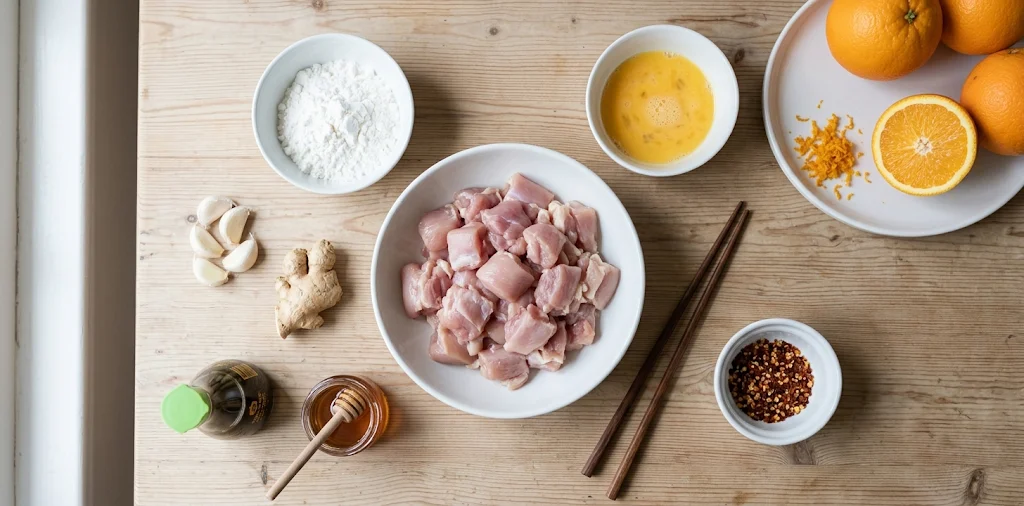
Chicken
- 600g boneless, skinless chicken thighs (breasts work too), cut into 3cm pieces
- 1 large egg, beaten
- 1 tbsp soy sauce
- 50g cornflour
- ½ tsp salt and ¼ tsp black pepper
- 4–5 tbsp vegetable or rapeseed oil
Orange sauce
- Zest of 1 large orange
- 150ml fresh orange juice (roughly 2 large oranges)
- 3 tbsp soy sauce
- 2 tbsp rice vinegar (white wine vinegar is fine)
- 2 tbsp honey or light brown sugar
- 3 garlic cloves, finely grated
- 1 tsp grated fresh ginger
- ½ tsp chilli flakes, if you like a little heat
- 1 tbsp cornflour stirred into 2 tbsp cold water
- 1 tsp sesame oil (optional)
To serve: rice or noodles, sliced spring onions, sesame seeds, and some steamed broccoli or pak choi.
How to Make It
Coat the chicken. Tip the chicken into a bowl with the egg and soy sauce and give it a good stir. In another bowl, mix the cornflour with the salt and pepper, then toss the chicken through it until no wet patches are left. A zip-top bag makes this less messy.
Make the sauce first. It’s quicker than you’d think, and having it ready means the chicken never sits around going soft. Put the zest, juice, soy sauce, vinegar, honey, garlic, ginger and chilli into a small pan and bring it to a gentle simmer. Stir your cornflour paste (it settles quickly, so re-stir it), pour it in and keep stirring for a minute or two. When the sauce coats the back of a spoon and looks glossy, it’s done. Take it off the heat and add the sesame oil.
Fry in batches. Heat 3 tbsp of the oil in a large non-stick frying pan over a medium-high heat.
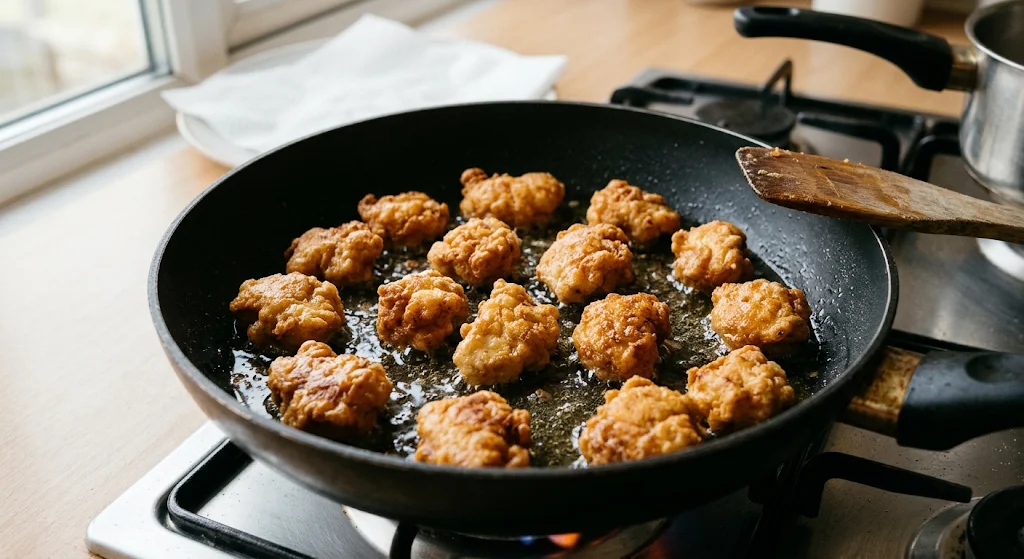
Add half the chicken in one layer, with a bit of space between the pieces, and leave it alone for a couple of minutes before turning. You’re looking for 5–6 minutes in total and a proper golden colour. Move it to kitchen paper, add a little more oil, and do the second batch.
Make sure it’s cooked. Cut open the biggest piece. It should be steaming hot throughout, with no pink and clear juices. The Food Standards Agency has good guidance on cooking chicken safely if you want to double-check.
Sauce and serve. Tip all the chicken back into the pan on a low heat, pour in the sauce and toss for about a minute.
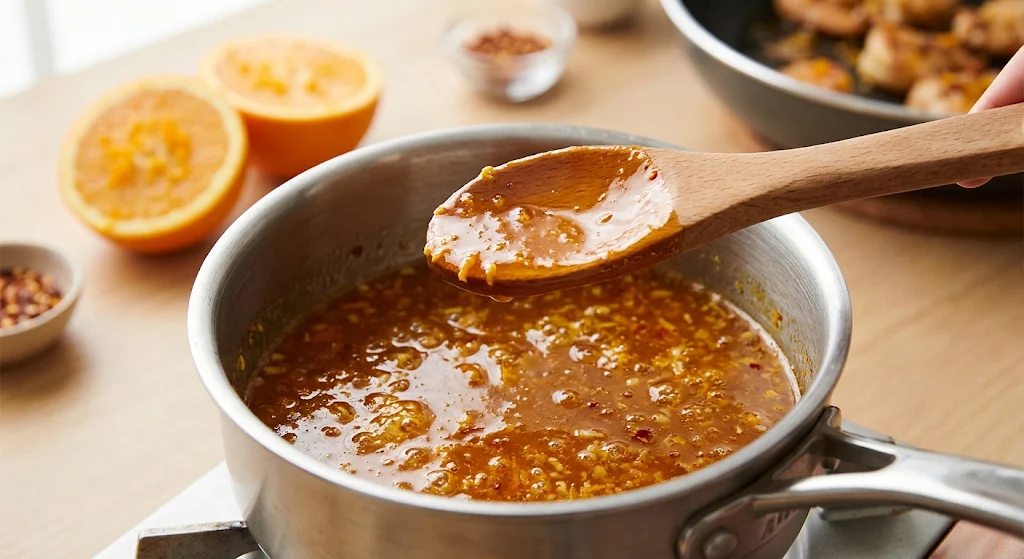
Then get it onto plates immediately. This is the one rule that really matters: the longer the chicken sits in the sauce, the softer the coating gets.
Little Things That Make a Difference
Don’t crowd the pan. If the chicken is packed in, it steams rather than fries, and you lose the crunch. Two batches is worth the extra five minutes.
Zest your oranges before you juice them. Trying to zest a squeezed orange half is a faff.
Thighs are more forgiving than breasts. They stay juicy even if you leave them a minute too long.
Taste the sauce before it meets the chicken. Oranges vary a lot, so if it’s too sweet, add a splash of vinegar, and if it’s sharp, a little more honey.
Air Fryer or Oven Instead?
You can skip the frying pan. In an air fryer, spray the coated chicken with oil and cook until golden, turning halfway. In the oven, spread it on a lined, oiled tray and turn it once. Both use less oil, though the pan gives you the crispiest result. Times depend on your machine and the size of your chicken pieces, so check that it’s cooked through before adding the sauce.
Swaps and Adjustments
- Gluten-free: use tamari rather than soy sauce, and check your cornflour label.
- Less sugar: use a little less honey. Extra vegetables in the pan also help the sauce go further.
- No rice vinegar: white wine or apple cider vinegar will do.
- No fresh oranges: use plain orange juice that isn’t from concentrate, plus a teaspoon of marmalade for extra citrus flavour.
- Vegetarian: well-pressed firm tofu or cauliflower florets work nicely.
- Spicier: add more chilli flakes or a spoonful of chilli sauce.
What to Serve With It
Jasmine rice is the obvious partner because it soaks up the sauce. Egg fried rice or noodles are good too. For balance, add broccoli, pak choi or peppers, which also cuts through the sweetness.
Leftovers
Cool the chicken quickly and get it into the fridge within about two hours, in an airtight container. Eat it within 2 days. Reheat until it’s steaming hot all the way through, and only reheat once. An air fryer or hot oven brings back some of the crunch; the microwave won’t.
Freezing isn’t ideal, as the coating turns soft. If you do want to freeze it, keep the cooked chicken and sauce separate.
A Note on Nutrition
We haven’t listed calories, because they change with your brands, how much oil the chicken absorbs and the size of your portions. If you need exact figures, put your own ingredients into a nutrition calculator. For a balanced plate, the NHS Eatwell Guide is a good reference.
FAQs
Can I use chicken breast?
Yes. Cut it into even pieces and take it off the heat as soon as it’s cooked, because breast dries out quickly.
How do I keep it crispy?
Coat the chicken evenly, fry it in a single layer and add the sauce right at the end.
Can I make it without frying?
Yes, with an air fryer or oven. It’ll be lighter but a bit less crunchy.
Can I make the sauce ahead?
Yes, it keeps in the fridge for a couple of days. Warm it gently before using.
My sauce is too thin or too thick. What now?
Thin: simmer it a little longer or add a bit more cornflour paste. Thick: loosen it with a splash of water or orange juice.
Is orange chicken healthy?
It depends on the recipe and the portion. Homemade lets you control the sugar, salt and oil, and plenty of vegetables on the side helps. It’s still a fried, sweet-sauced dish, so it suits a varied diet rather than every night. If you follow a medical diet, check with your GP or a registered dietitian.
Can I use carton orange juice?
Yes, though fresh tastes brighter. Pick one with no added sugar.


Leave a Reply