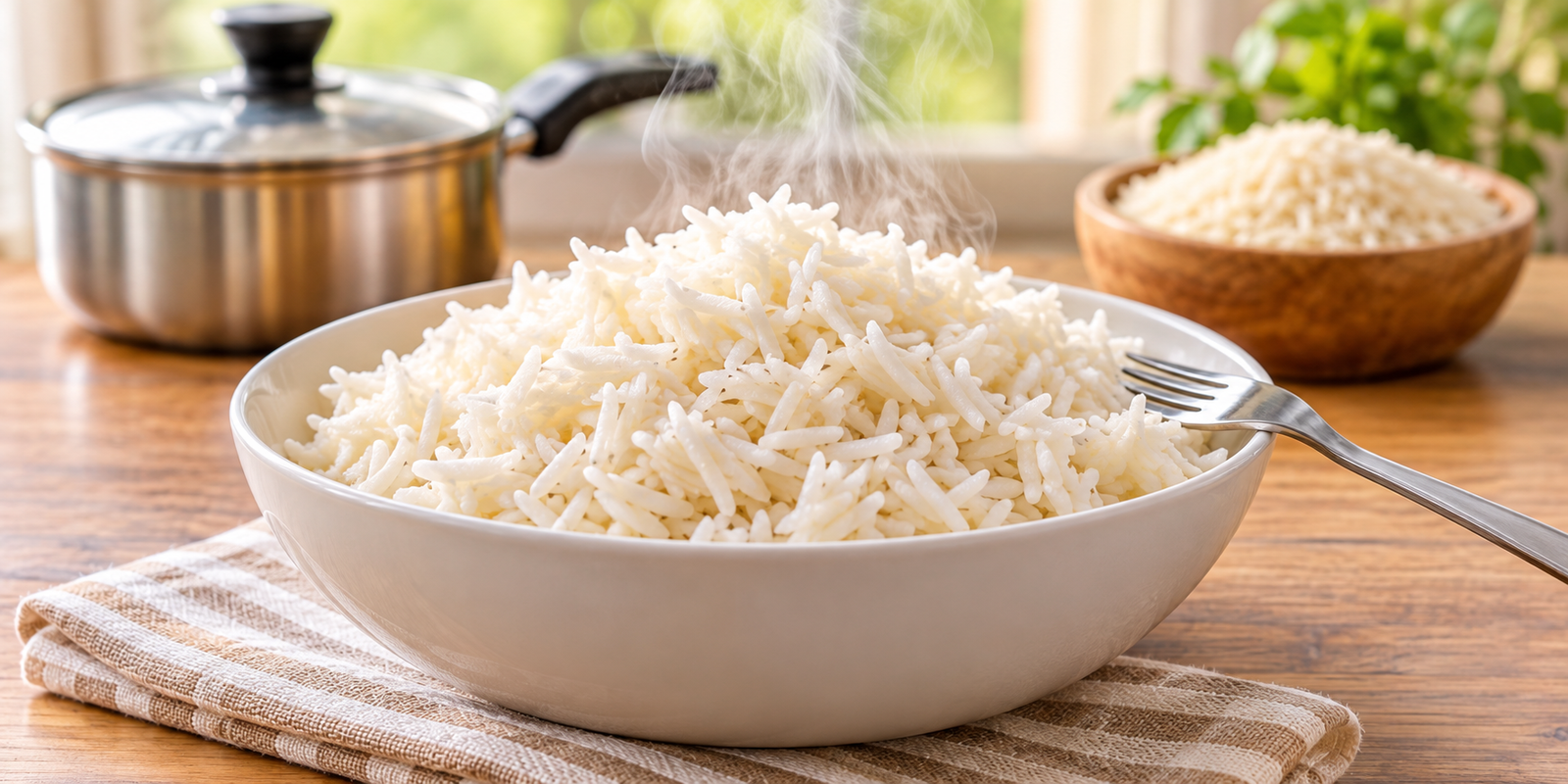
Rice is the side dish everyone assumes they can make, right up until it turns out like wallpaper paste. Or crunchy in the middle. Or welded to the bottom of the pan.
Jasmine rice is quite forgiving once you get three things right: the amount of water, the heat, and what you do with the lid. After that it’s just waiting.
Prep: 5 minutes | Cook: 12 minutes | Rest: 10 minutes | Total: about 30 minutes | Serves: 4 | Difficulty: Easy
What Is Jasmine Rice?
It’s a long-grain white rice, mostly grown in Thailand. Cooked, it’s soft, a touch sticky and gently floral. That’s where the name comes from, since there’s no actual jasmine in it.
Compared with basmati, the grains are plumper and cling together a little more. That suits curries, stir-fries and anything saucy.
Jasmine Rice vs Basmati Rice

| Jasmine rice | Basmati rice | |
|---|---|---|
| Usual origin | Thailand | India and Pakistan |
| Grain | Long, slightly plump | Very long and slim |
| Cooked texture | Soft, slightly sticky | Lighter, drier, separate |
| Smell | Soft and floral | Nutty and aromatic |
| Good with | Thai and Chinese dishes, coconut curries, stir-fries | Indian curries, biryani, pilaf |
In a pinch, you can swap one for the other. Just expect jasmine to come out softer.
Ingredients

- 300g jasmine rice
- 450ml cold water
- ½ tsp salt (optional)
- 1 tsp butter or oil (optional)
That works out at roughly 1 part rice to 1¼ parts water by volume, for rinsed rice. Skip the rinsing and you might need a splash less.
How to Cook Jasmine Rice on the Hob
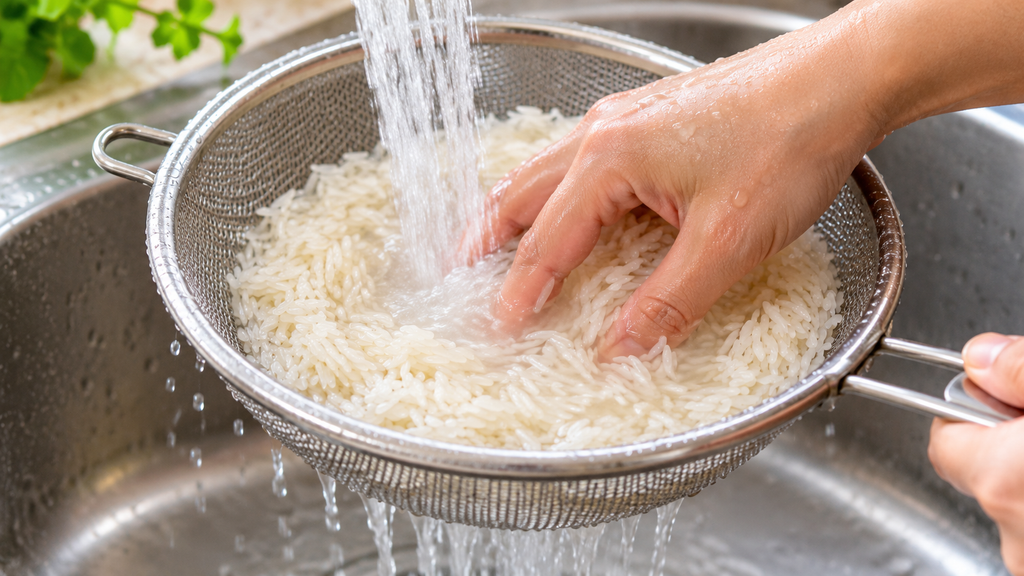
Rinse it. Tip the rice into a sieve and rinse under cold water, swishing with your fingers, until the water runs mostly clear. You’re washing off loose starch, which is what makes rice gluey. Drain well.
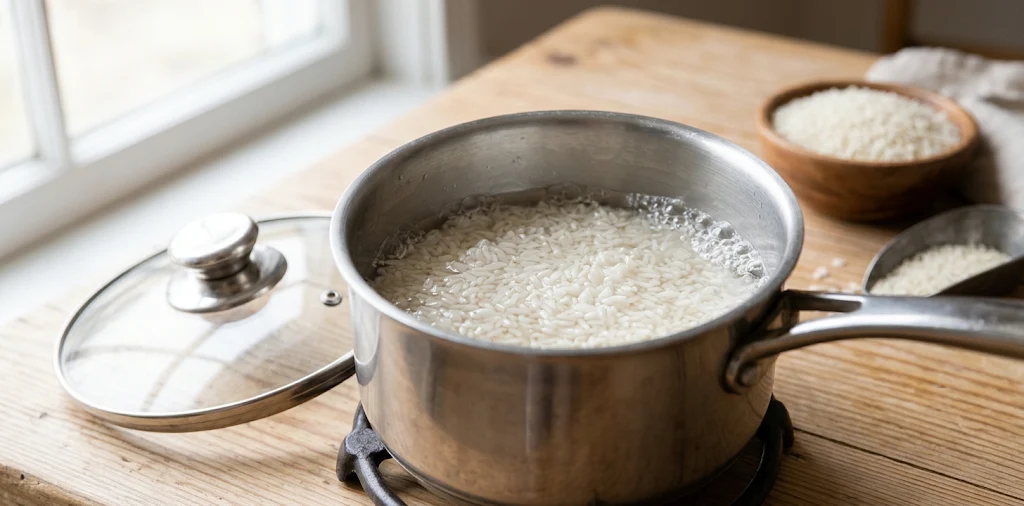
Into the pan. Use a medium saucepan with a lid that fits properly. Add the rice, water, and the salt and butter if you’re using them. Give it one stir.
Boil, then stop stirring. Heat until the water bubbles. After that, leave it alone.
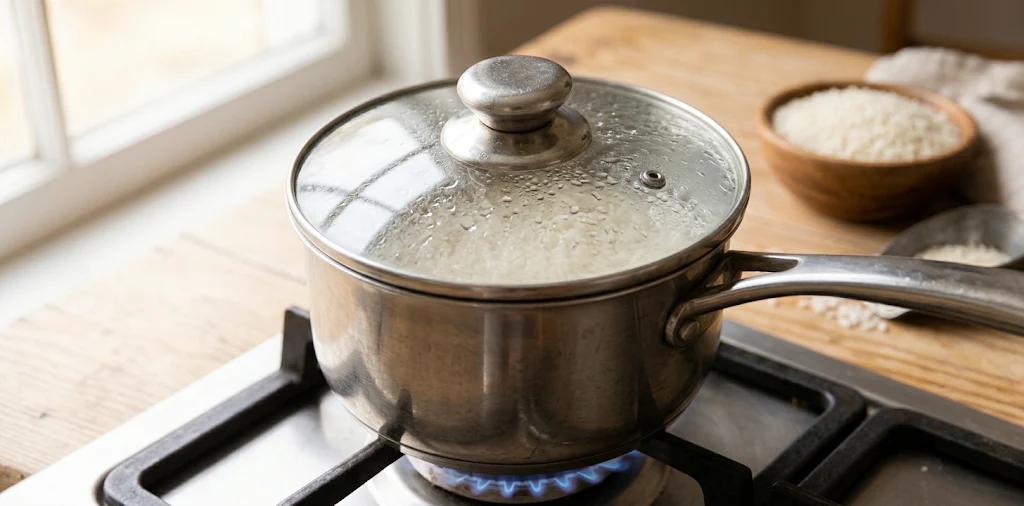
Lid on, heat right down. Turn the heat to its lowest setting and cook for 10 to 12 minutes. No peeking. The steam is doing the work, and every time you lift the lid some of it escapes.
Rest. Take the pan off the heat and leave the lid on for 10 minutes.
It feels like wasted time, but this is what stops the rice being wet on top and hard underneath.
Fluff. Use a fork, not a spoon, and go gently so you don’t mash the grains.
Tips for Fluffy Jasmine Rice
- Measure the water. Too much is the classic cause of mushy rice, so use a jug rather than eyeballing it.
- Sort out a loose lid. If steam is escaping, put a sheet of foil or a clean tea towel under the lid.
- Keep the heat low. A hard boil makes rice stick and catch on the bottom.
- Soaking is optional. Half an hour in cold water can make it a bit softer. If you do it, drain well, cook as normal and check it a little earlier.
- Still wet after resting? Lid back on, very low heat, a few more minutes.
Cooking Jasmine Rice in a Rice Cooker
Rinse the rice first, then follow the water markings or ratio in your cooker’s manual, because machines differ. Choose the white rice setting. When it clicks off, leave it for 10 minutes before you open the lid and fluff.
What About Brown Jasmine Rice?
It needs more water and a longer cooking time than white, so follow the packet rather than the amounts above. It’s chewier and has more fibre. The NHS Eatwell Guide suggests choosing wholegrain or higher-fibre versions of starchy foods where you can.
What to Serve With Jasmine Rice
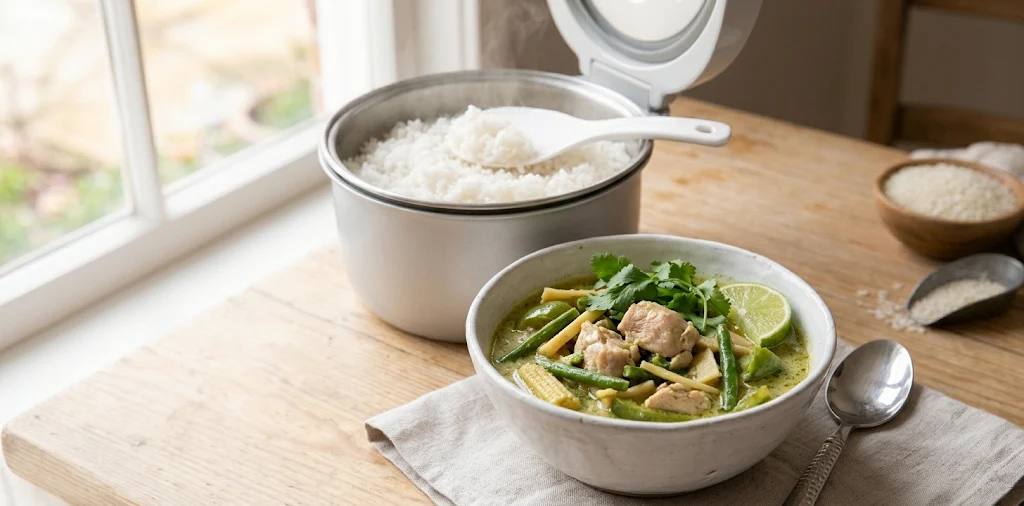
Pretty much anything with a sauce. Thai green or red curry, orange chicken, stir-fries, satay or a coconut-based curry. It also makes a good base for a quick rice bowl, with vegetables, a fried egg and some soy sauce.
Storage and Reheating
Cooked rice is one of those foods you can’t leave sitting out. Bacteria that survive cooking can multiply at room temperature, so the NHS advice is to serve it as soon as it’s cooked.
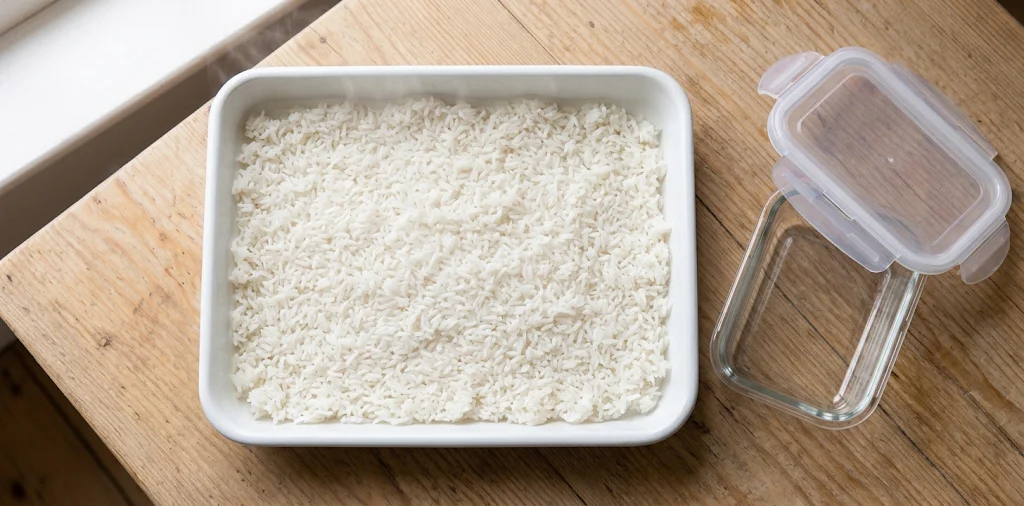
Leftovers need to cool fast, ideally within an hour. Spreading the rice on a shallow tray helps. Then chill it, eat it within a day, and reheat until it’s steaming hot all the way through. Only reheat it once.
The same goes for rice you plan to use for fried rice: cool it quickly, chill it and use it within a day.
A Note on Nutrition
White jasmine rice is a refined starchy food and a good source of carbohydrate. We haven’t listed calories, since they depend on your portion and how much butter or oil goes in. For exact figures, put your own ingredients into a nutrition calculator. If you have diabetes or follow a medical diet, ask your GP or a registered dietitian about portion sizes and which types of rice suit you.
FAQs
What’s the water ratio for jasmine rice? About 1 part rice to 1¼ parts water by volume for rinsed rice. For 300g of rice, that’s around 450ml.
How long does it take to cook? About 10 to 12 minutes on a low heat with the lid on, then 10 minutes resting.
Do I have to rinse it? It’s best to. Rinsing removes surface starch, so the grains clump less.
Why is mine sticky or mushy? Usually too much water, no rinsing, stirring during cooking or a heat that’s too high.
Why is mine hard in the middle? Not enough water, a loose lid or too little time. Add a splash of water and cook it covered on a very low heat for a few more minutes.
Is jasmine rice the same as sticky rice? No. Sticky (glutinous) rice is a different type and much stickier. Jasmine is only slightly sticky.
Can I use it instead of basmati? Yes, though it’ll come out softer and stickier. Adjust the water if you need to.
Is jasmine rice healthy? White jasmine rice is a refined grain, so it’s best as part of a varied diet with vegetables and protein. Brown jasmine rice has more fibre.



Leave a Reply