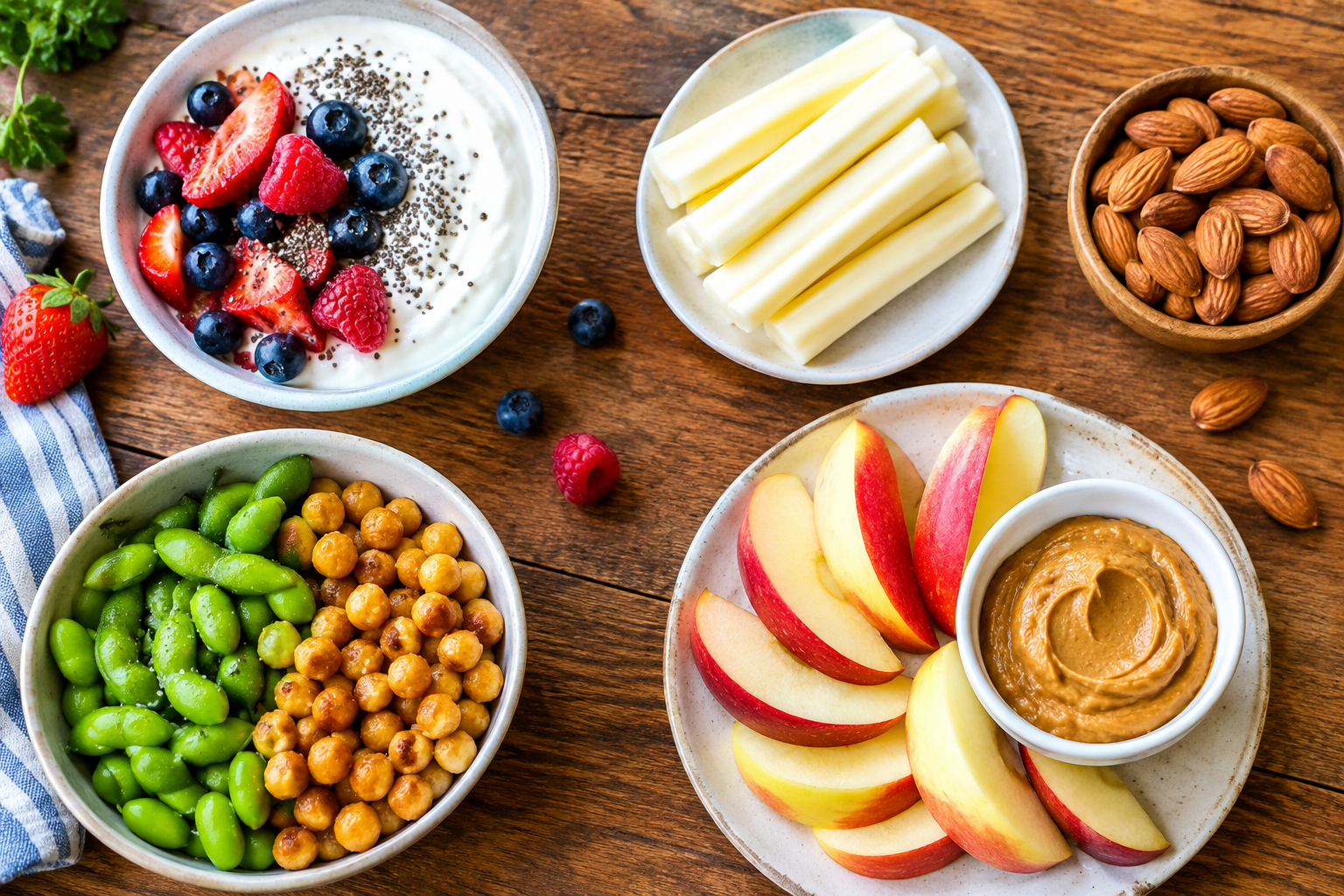
The adult Recommended Dietary Allowance, set by the US National Academies, is 0.8 grams of protein per kilogram of body weight per day, which works out to about 0.36 grams per pound. That’s a baseline. Older adults, very active people, and anyone with a health condition may need a different amount, so a registered dietitian is the best person to ask. For general food-group guidance, the protein foods is a useful starting point.
For snacks, a target of roughly 8 to 15 grams is common. Protein-rich snacks can help you feel satisfied, especially when they come with fiber from fruit, vegetables, or whole grains. Portion size matters too.
Quick Snacks With No Prep
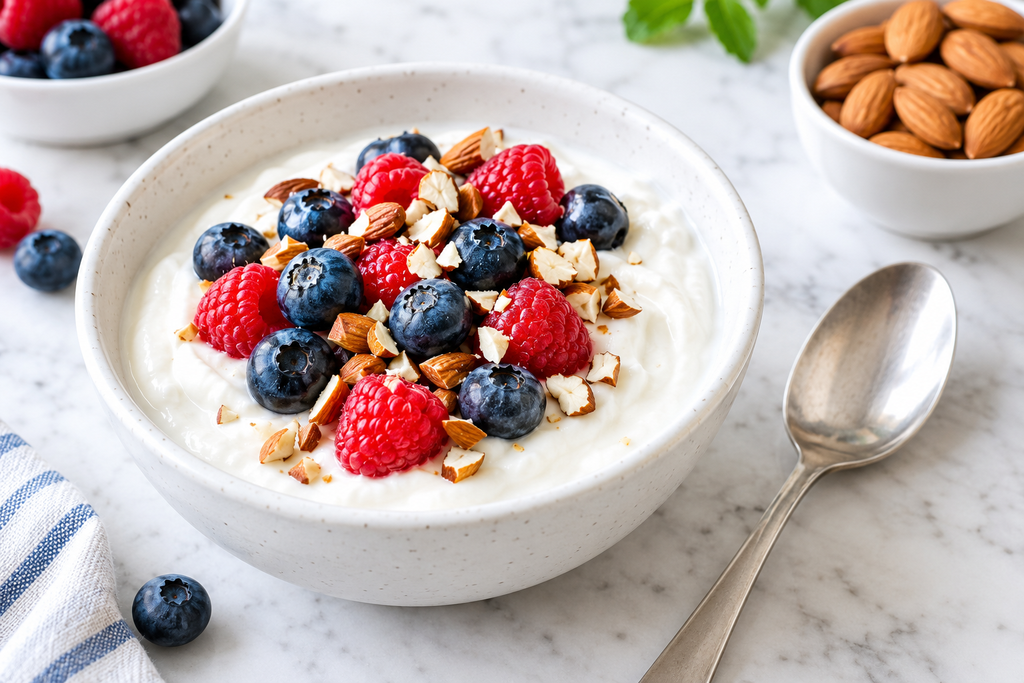
1. Greek yogurt. A three-quarter cup of plain nonfat Greek yogurt has roughly 15 to 17 grams of protein, depending on the brand. Plain is the better choice, because flavored cups can carry a lot of added sugar. Add berries or a few chopped nuts for flavor.
2. String cheese. One stick usually has about 6 to 7 grams. It’s portable, it needs no knife, and it pairs well with an apple or a handful of grapes.
3. Almonds or pumpkin seeds. An ounce of almonds has about 6 grams, and an ounce of shelled pumpkin seeds has about 8 to 9. Nuts and seeds are calorie-dense, so measure a small handful instead of eating from the bag.
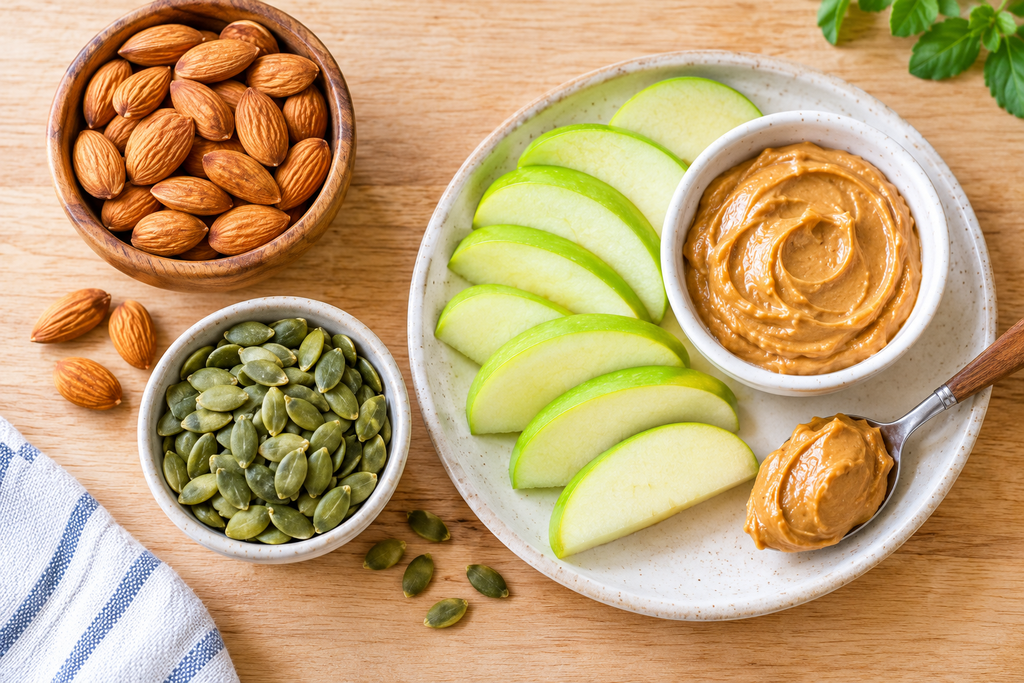
4. Peanut butter on apple slices. Two tablespoons of peanut butter provide around 7 to 8 grams. Choose one with a short ingredient list, ideally just peanuts and maybe salt.
Fridge Staples

5. Cottage cheese. A half cup has roughly 12 to 14 grams. If the texture isn’t for you, try it with sliced peaches and cinnamon, or with tomato and black pepper. Blending it makes it smooth and creamy.
6. Hard-boiled eggs. A large egg has about 6 grams of protein. Cook a batch, refrigerate them promptly, and eat them within a week. They’re easy to carry, but they need to stay cold if you’re taking them out of the house.
7. Turkey roll-ups. Wrap sliced deli turkey around cheese and a cucumber spear. Two ounces of turkey provide roughly 10 grams, though amounts vary by product. Deli meats can be high in sodium, so check the label.
Plant-Based Options
8. Edamame. A half cup of shelled edamame has around 9 grams of protein. Buy it frozen, steam it, and sprinkle on a little salt. It’s also fine at room temperature, so it works for the office.
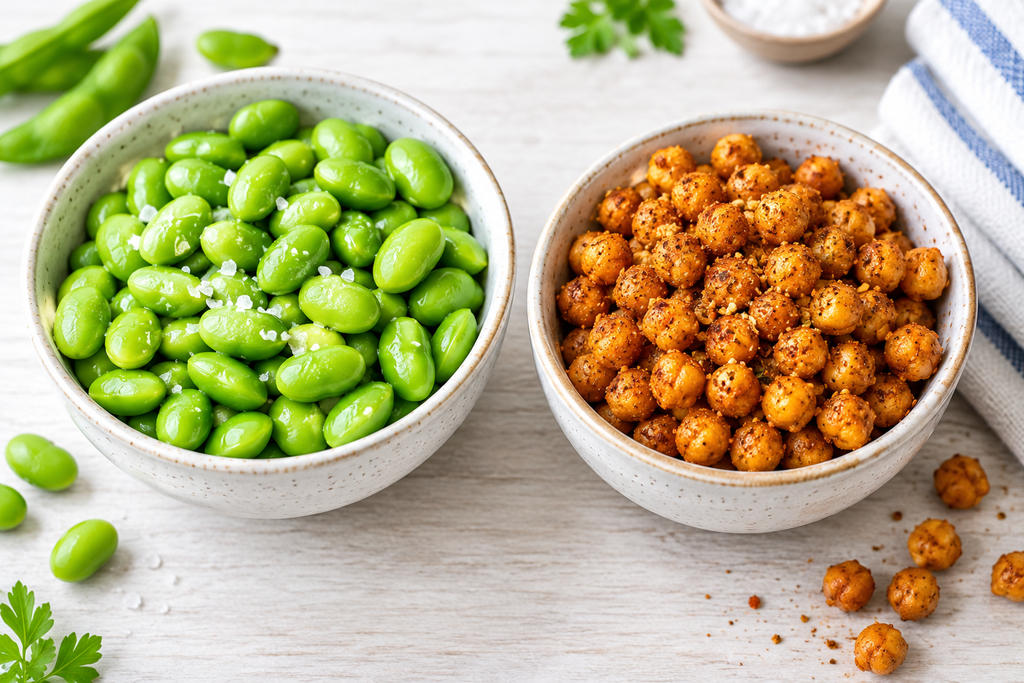
9. Roasted chickpeas. Drain and dry canned chickpeas, toss them with oil and spices, and roast until crisp. An ounce has about 6 grams of protein, depending on how they’re made. Store-bought versions vary a lot in sodium and added oil, so compare labels.
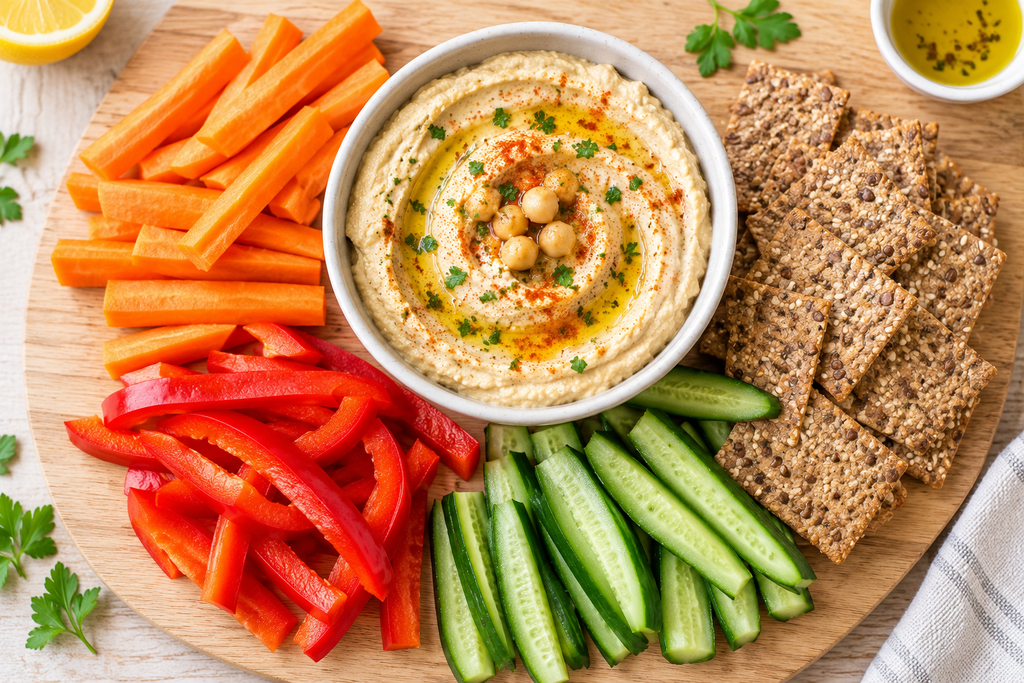
10. Hummus with vegetables. Honest note: hummus is lower in protein than people assume, around 2 grams per two tablespoons. It’s still a good pairing with carrots, peppers, or whole grain crackers, but it won’t carry a snack on its own. Add a handful of edamame or a string cheese to round it out.
Savory Picks
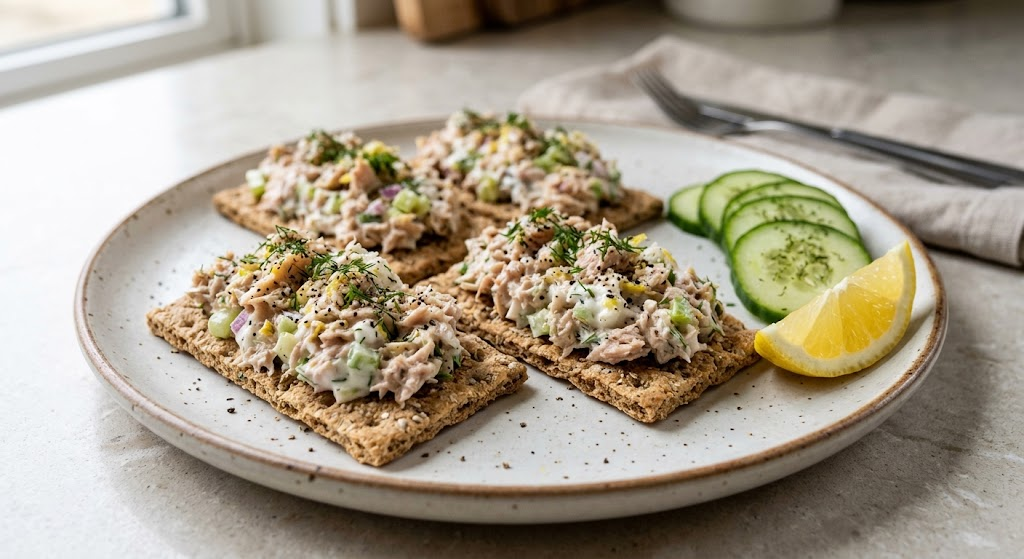
11. Canned tuna on crackers. A three-ounce serving of canned tuna typically has 16 to 20 grams of protein. Mix it with Greek yogurt and a squeeze of lemon instead of mayo for a lighter version, and serve it on whole grain crackers or cucumber slices. It’s best eaten fresh or kept cold.
12. Jerky. An ounce usually has about 9 to 10 grams. It’s shelf-stable, which is its biggest advantage. The trade-off is sodium and sometimes added sugar, so read the label, and treat jerky as an occasional option more than a daily one.
Quick Reference
| Snack | Approx. protein |
|---|---|
| Plain Greek yogurt, ¾ cup | 15–17 g |
| Canned tuna, 3 oz | 16–20 g |
| Cottage cheese, ½ cup | 12–14 g |
| Deli turkey, 2 oz | Around 10 g |
| Jerky, 1 oz | 9–10 g |
| Edamame, ½ cup shelled | Around 9 g |
| Pumpkin seeds, 1 oz | 8–9 g |
| Peanut butter, 2 tbsp | 7–8 g |
| String cheese, 1 stick | 6–7 g |
| Almonds, 1 oz | Around 6 g |
| Hard-boiled egg, 1 large | Around 6 g |
Values are estimates and vary by brand and preparation. Your package label is the better guide.
A Few Practical Notes
Keep perishable snacks cold. Dairy, eggs, tuna, and deli meat shouldn’t sit at room temperature for more than two hours, or one hour when it’s above 90°F. An insulated bag with an ice pack handles most of this.
Allergies matter here. Several options contain dairy, nuts, soy, eggs, or fish, so read ingredient lists carefully.
Pairing helps. Protein plus a piece of fruit or a few whole grain crackers tends to be more satisfying than protein alone.
If you’d like more everyday ideas, take a look at Praviceler.
Final Thoughts
You don’t need protein bars or powders to snack well. Yogurt, cheese, eggs, edamame, chickpeas, and a few nuts cover most situations. Pick three or four that fit your routine, keep them stocked, and rotate when you get bored.


Leave a Reply