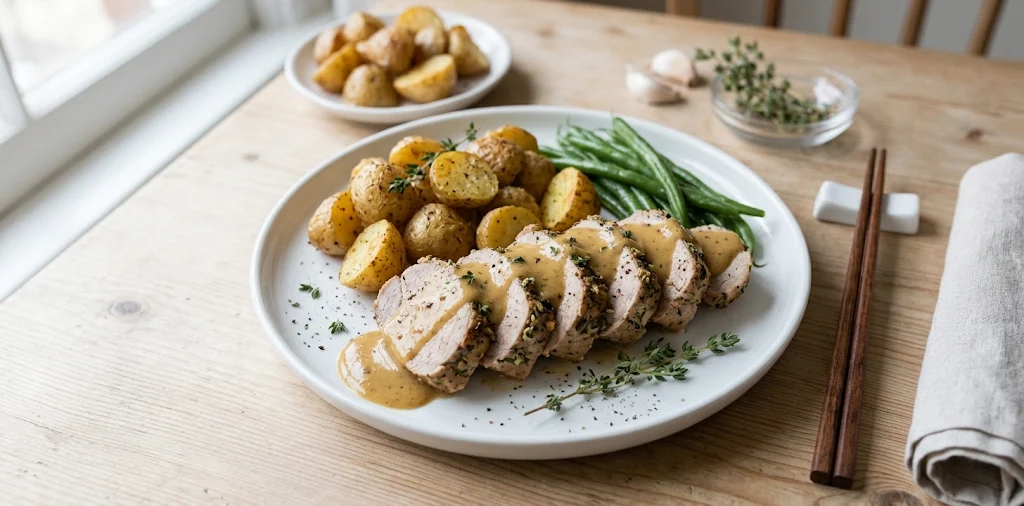
Dry pork tenderloin is something most of us have served at least once. It’s lean, so there’s no fat to cover for you, and five minutes too long in the oven does the damage. The good news is you don’t need a marinade or any special kit. A hot pan, a short roast and a thermometer will sort it. No thermometer? Watch the clock and cut into the thickest part to check.
This one gets a coating of mustard, paprika, garlic and thyme, then a quick pan sauce made in the same frying pan. Less washing up, which is half the appeal on a weeknight.
What Is Pork Tenderloin?
If you’re shopping in the UK, it’s usually labelled pork fillet. It’s the long, skinny muscle that runs along the backbone, and because it hardly does any work, it’s naturally tender. Don’t mix it up with pork loin, which is a wider, chunkier joint that needs a much longer roast.
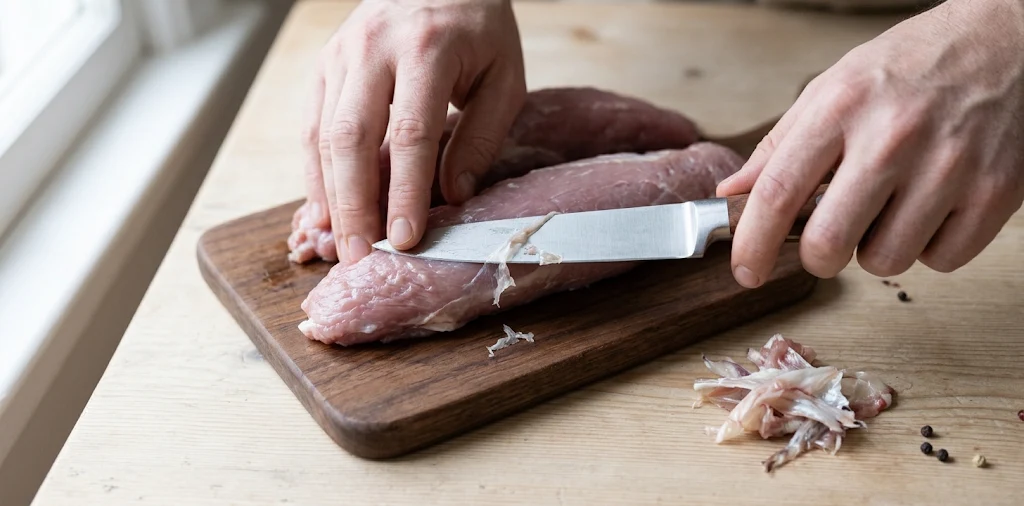
Before you start, look for the silver skin, a thin shiny strip of membrane on the side. Slide a sharp knife under it and trim it off. Leave it on and it shrinks as it cooks, so the fillet curls up and turns chewy.
How to Cook Pork Tenderloin
Get ready. Heat the oven to 200°C (180°C fan, gas 6). Trim the silver skin and pat the pork dry with kitchen paper, as a damp surface steams instead of browning. Stir the Dijon, paprika, garlic granules, thyme, salt and pepper together and rub it all over.
Sear. Heat the oil in an ovenproof frying pan over a medium-high heat.
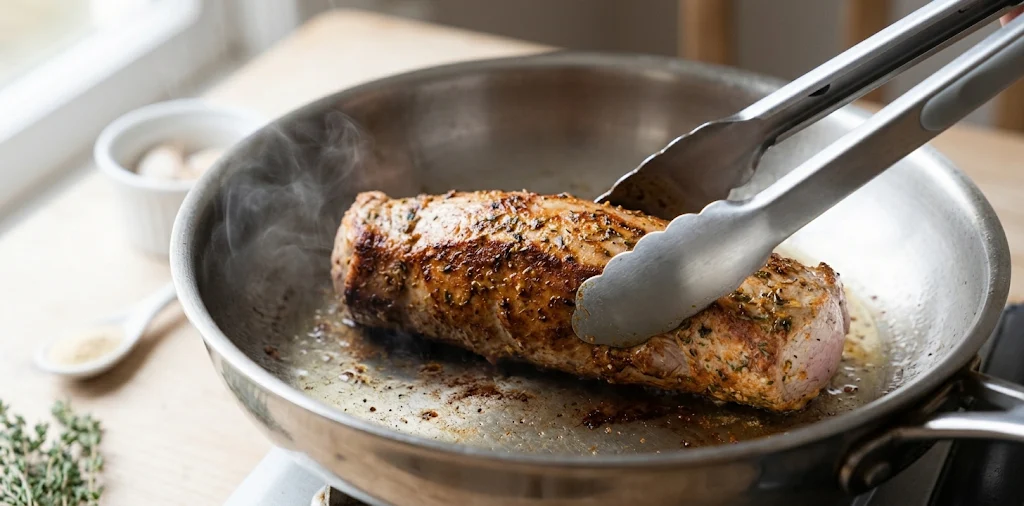
Add the pork and leave it alone for 2 minutes. Then turn it every couple of minutes until it’s golden all over, 6 to 8 minutes in total. This is just for colour, so don’t worry about cooking it through yet.
Roast. Pop the whole pan in the oven (or move the pork to a baking tray if your pan can’t go in). Give it about 15 to 20 minutes for fillets this size. Thinner ones will be quicker, thicker ones slower, so start checking early.
Check it’s cooked. Pork has to be cooked all the way through.
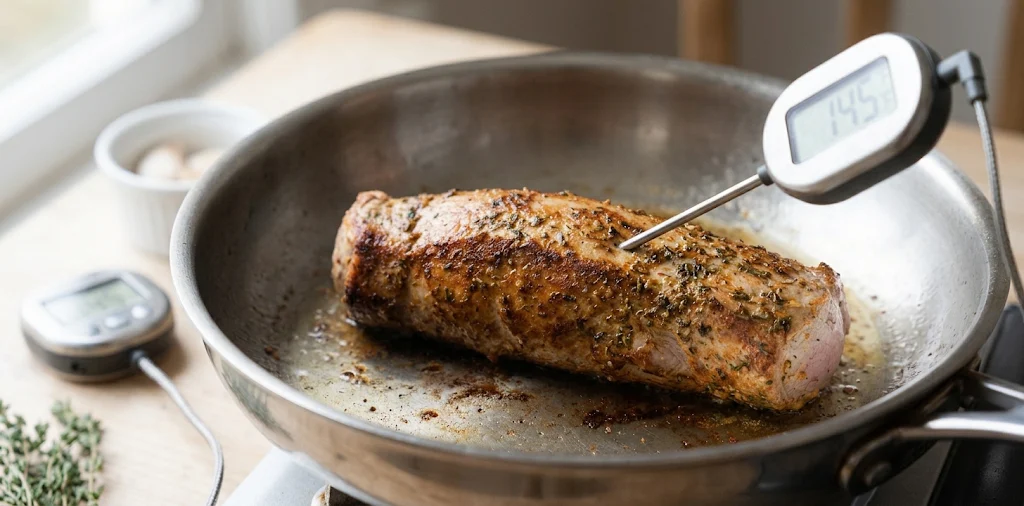
The Food Standards Agency says it should be steaming hot in the middle, with no pink meat and clear juices. With a probe, aim for 70°C in the thickest part, held for 2 minutes. You’ll see lower temperatures in some American recipes, but if you’re in the UK, stick with FSA guidance.
Rest. Move it to a board, cover loosely with foil and leave it for 5 to 10 minutes. The juices settle back into the meat instead of flooding the board when you slice.
Sauce. While it rests, put the same pan on a medium heat (the handle will be hot, so be careful). Melt the butter, add the garlic and give it 30 seconds. Add the stock, wholegrain mustard and thyme, and let it bubble for 3 to 4 minutes until it’s reduced by about half. Stir in the cream if you’re using it, plus any juices from the board.
Serve. Slice into rounds about 2cm thick and spoon the sauce over.

Tips for Juicy Pork Tenderloin
Don’t skip the rest. Cut it straight out of the oven and you’ll watch the juices run out onto the board.
Treat the timings as a guide. Ovens vary, and so do fillets. A cheap probe thermometer is honestly one of the most useful bits of kit for cooking meat.
Cooking two fillets together? Try to pick ones of a similar size. If one has a thin tail, fold it under so it doesn’t overcook.
And give the pork room in the pan. Crowd it and it won’t brown properly.
Storage and Reheating
Let it cool, then get it into the fridge within about two hours. Keep it in an airtight container and eat it within 2 days. Reheat until it’s steaming hot all the way through, and only reheat once. Slices do better in a covered dish with a splash of stock than in a dry microwave, which toughens them.
You can freeze cooked pork, though it’s nicest fresh. If you do, defrost it fully in the fridge first.
Leftover slices are great cold in a sandwich with a bit of mustard.
A Note on Nutrition
Pork tenderloin is one of the leaner cuts of pork, but we haven’t listed calories. They change with the size of your fillet, how much oil, butter and cream you use, and your portion. For exact figures, put your own ingredients into a nutrition calculator. The NHS Eatwell Guide is a good reference for balancing the plate.
FAQs
How long does pork tenderloin take to cook?
For 300g fillets, sear for 6 to 8 minutes, then roast for about 15 to 20 minutes at 200°C (180°C fan). Thickness matters more than weight, so check with a thermometer.
What temperature should it reach?
FSA guidance: steaming hot throughout, no pink meat, clear juices. A probe reading of 70°C held for 2 minutes in the thickest part is the equivalent check.
Why is mine dry?
Usually it’s been cooked a few minutes too long, or sliced without resting. It’s a very lean cut.
Is it the same as pork loin?
No. Tenderloin (fillet) is thin and cooks fast. Loin is a bigger joint that needs longer.
Can I cook it from frozen?
Defrost it fully in the fridge first. It’s safer and cooks more evenly.
Can I prep it ahead?
Yes. Season and sear it earlier in the day, keep it covered in the fridge, then roast just before serving. Make the sauce fresh.
Is pork tenderloin healthy?
It’s a lean cut and a good source of protein, but it depends on how you cook it and what goes with it. If you follow a medical diet, check with your GP or a registered dietitian.



Leave a Reply